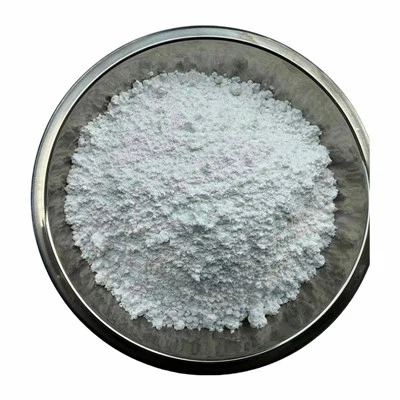


Silica powder is a widely used industrial material with a variety of applications across different sectors. As a supplier of 600 mesh silica powder, I often receive inquiries from customers about its properties, including its solubility in water. In this blog post, I will delve into the topic of whether 600 mesh silica powder dissolves in water, exploring the science behind it and its implications for various industries.
Understanding Silica Powder and Mesh Size
Before we discuss the solubility of 600 mesh silica powder in water, it's important to understand what silica powder is and what the "600 mesh" specification means. Silica powder, also known as silicon dioxide powder, is a fine, white powder composed of silicon and oxygen atoms. It is a common mineral found in nature and is widely used in industries such as ceramics, glass, paints, coatings, and rubber.
The term "mesh" refers to the number of openings per linear inch in a sieve. A higher mesh number indicates a finer powder, as the particles are smaller and can pass through a sieve with more openings. Therefore, 600 mesh silica powder consists of very fine particles that are approximately 25 micrometers in diameter.
The Solubility of Silica in Water
Silica is generally considered to be insoluble in water under normal conditions. This is because silica has a high melting point and a strong covalent bond between silicon and oxygen atoms, which makes it difficult for water molecules to break apart the silica structure and dissolve it. However, the solubility of silica in water can be affected by several factors, including temperature, pH, and the presence of other substances.
At room temperature and neutral pH, the solubility of silica in water is extremely low, on the order of a few parts per million (ppm). This means that only a very small amount of silica will dissolve in water, and most of the silica powder will remain as a solid suspension. However, as the temperature increases, the solubility of silica in water also increases. At high temperatures, such as those found in geothermal systems or industrial processes, silica can dissolve more readily in water.
The pH of the water can also affect the solubility of silica. In acidic solutions, silica is more soluble than in neutral or alkaline solutions. This is because the hydrogen ions in acidic solutions can react with the silica surface, breaking the silicon-oxygen bonds and making it easier for the silica to dissolve. On the other hand, in alkaline solutions, the hydroxide ions can react with the silica surface to form silicate ions, which can also increase the solubility of silica.
The Solubility of 600 Mesh Silica Powder
Based on the general solubility of silica in water, we can conclude that 600 mesh silica powder is also insoluble in water under normal conditions. The fine particle size of 600 mesh silica powder does not significantly affect its solubility, as the solubility of silica is primarily determined by its chemical structure and the properties of the water.
However, the small particle size of 600 mesh silica powder can make it more prone to forming a stable suspension in water. When 600 mesh silica powder is added to water, the fine particles can remain suspended in the water for a longer period of time, rather than settling to the bottom. This can give the appearance of partial dissolution, but in reality, the silica powder is still a solid phase.
Applications of 600 Mesh Silica Powder
Despite its insolubility in water, 600 mesh silica powder has many important applications in various industries. In the ceramics industry, 600 mesh silica powder is used as a raw material for making high-quality ceramics, such as porcelain and sanitaryware. The fine particle size of the silica powder allows for better dispersion and mixing with other ceramic materials, resulting in a more uniform and dense ceramic body.
In the glass industry, 600 mesh silica powder is used as a major component in the production of glass. The silica powder provides the glass with its strength, transparency, and chemical resistance. The fine particle size of the silica powder also helps to improve the melting and refining process of the glass, resulting in a higher quality glass product.
In the paints and coatings industry, 600 mesh silica powder is used as a filler and extender. The fine particles of the silica powder can improve the viscosity, thixotropy, and anti-settling properties of the paints and coatings, as well as enhance their hardness, scratch resistance, and weatherability.
In the rubber industry, 600 mesh silica powder is used as a reinforcing filler. The fine particles of the silica powder can improve the mechanical properties of the rubber, such as its tensile strength, tear strength, and abrasion resistance. The silica powder can also reduce the heat build-up and rolling resistance of the rubber, making it more suitable for use in tires and other rubber products.
Conclusion
In conclusion, 600 mesh silica powder is insoluble in water under normal conditions. The fine particle size of the silica powder does not significantly affect its solubility, but it can make it more prone to forming a stable suspension in water. Despite its insolubility in water, 600 mesh silica powder has many important applications in various industries, thanks to its unique properties and fine particle size.


If you are interested in purchasing 600 mesh silica powder or other mesh sizes such as 800 Mesh Silica Powder, 1500 Mesh Silica Powder, or 300 Mesh Silica Powder, please feel free to contact us for more information. We are a reliable supplier of high-quality silica powder, and we can provide you with the best products and services to meet your specific needs.
References
- Iler, R. K. (1979). The Chemistry of Silica: Solubility, Polymerization, Colloid and Surface Properties, and Biochemistry. John Wiley & Sons.
- Brinker, C. J., & Scherer, G. W. (1990). Sol-Gel Science: The Physics and Chemistry of Sol-Gel Processing. Academic Press.
- Birdi, K. S. (1997). Handbook of Surface and Colloid Chemistry. CRC Press.