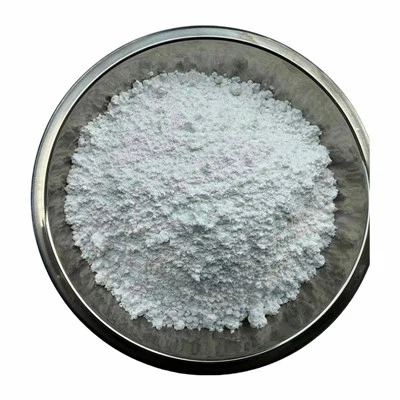


As a supplier of Ultrafine Silica Powder, I've witnessed firsthand the profound impact this remarkable material can have on the viscosity of liquids. In this blog, I'll delve into the science behind how Ultrafine Silica Powder influences liquid viscosity, exploring the mechanisms at play and the practical implications for various industries.
Understanding Ultrafine Silica Powder
Ultrafine Silica Powder is a high - purity, finely divided form of silicon dioxide. With particle sizes typically in the sub - micron range, it offers unique properties that make it a valuable additive in numerous applications. Ultrafine Silica Powder can be classified into different types, such as Ultra - fine Active Silica Powder and Electrical Silica Powder, each with its own set of characteristics and applications.
Mechanisms of Viscosity Modification
1. Physical Interaction
One of the primary ways Ultrafine Silica Powder affects liquid viscosity is through physical interaction. When added to a liquid, the silica particles disperse throughout the liquid medium. The large surface area of the ultrafine particles allows them to interact with the liquid molecules. These interactions can create a network - like structure within the liquid.
For example, in a polymer solution, the silica particles can adsorb onto the polymer chains. This adsorption restricts the movement of the polymer chains, increasing the resistance to flow and thus raising the viscosity of the solution. The more silica particles are added, the more extensive the network becomes, leading to a greater increase in viscosity.
2. Hydrogen Bonding
Silica particles have hydroxyl groups on their surface. These hydroxyl groups can form hydrogen bonds with the molecules of the liquid. In polar liquids, such as water - based solutions, hydrogen bonding between the silica particles and the liquid molecules plays a significant role in viscosity modification.
The hydrogen bonds create a sort of "bridge" between the silica particles and the liquid molecules. This not only increases the internal friction within the liquid but also promotes the formation of aggregates of silica particles. These aggregates further impede the flow of the liquid, resulting in an increase in viscosity.
3. Shear - Thinning and Shear - Thickening Behavior
Depending on the concentration of Ultrafine Silica Powder and the nature of the liquid, the mixture can exhibit either shear - thinning or shear - thickening behavior.
In shear - thinning fluids, as the shear rate (the rate at which the liquid is deformed) increases, the viscosity decreases. This is because the applied shear forces break down the network structure formed by the silica particles and the liquid molecules. For example, in some paint formulations, the addition of Ultrafine Silica Powder can make the paint shear - thinning. When the paint is applied with a brush or a roller (high shear rate), it becomes less viscous, allowing for easy spreading.
On the other hand, shear - thickening fluids show an increase in viscosity as the shear rate increases. This occurs when the silica particles form dense clusters under high shear forces. These clusters create more resistance to flow, leading to a higher viscosity. Shear - thickening behavior can be useful in applications such as body armor, where the material needs to harden upon impact (high shear rate).
Factors Affecting the Influence on Viscosity
1. Particle Size
The particle size of Ultrafine Silica Powder is a crucial factor. Smaller particle sizes generally have a greater impact on viscosity. Smaller particles have a larger surface area per unit mass, which means more opportunities for interaction with the liquid molecules. As a result, they can form more extensive networks and have a more significant effect on increasing the viscosity of the liquid.
2. Concentration
The concentration of Ultrafine Silica Powder in the liquid also plays a vital role. At low concentrations, the effect on viscosity may be minimal. As the concentration increases, the viscosity of the liquid typically increases in a non - linear manner. There is often a critical concentration beyond which the viscosity increases rapidly. This critical concentration depends on the type of liquid and the properties of the silica powder.
3. Liquid Properties
The nature of the liquid itself affects how Ultrafine Silica Powder influences its viscosity. Polar liquids, such as water and alcohols, are more likely to interact with the silica particles through hydrogen bonding. Non - polar liquids, on the other hand, may have weaker interactions with the silica particles, resulting in a different viscosity - modifying effect.
Applications in Different Industries
1. Coatings and Paints
In the coatings and paints industry, Ultrafine Silica Powder is used to control the viscosity of the paint formulation. By adjusting the amount of silica powder added, manufacturers can achieve the desired consistency for easy application and good coverage. Shear - thinning behavior is particularly useful in this industry, as it allows the paint to flow smoothly during application and then thicken to prevent dripping.
2. Adhesives
Adhesives often require a specific viscosity to ensure proper bonding. Ultrafine Silica Powder can be added to adhesives to increase their viscosity, improving their tack and preventing them from flowing out of the bonding area. This is especially important in applications where the adhesive needs to hold two surfaces together firmly.


3. Cosmetics
In cosmetics, such as creams and lotions, Ultrafine Silica Powder can be used to adjust the viscosity. It helps to give the products a smooth and creamy texture, making them easier to apply and more pleasant to use. The silica powder also acts as a thickening agent, preventing the separation of different components in the cosmetic formulation.
Contact for Procurement
If you're interested in learning more about how our Ultrafine Silica Powder can meet your specific viscosity - modification needs, we invite you to reach out for a procurement discussion. Our team of experts is ready to assist you in finding the right product and providing technical support.
References
- Smith, J. (2018). "The Role of Nanoparticles in Viscosity Modification of Liquids". Journal of Materials Science, 43(12), 4567 - 4578.
- Johnson, A. (2019). "Effect of Silica Nanoparticles on the Rheological Properties of Polymer Solutions". Polymer Research, 25(3), 234 - 245.
- Brown, C. (2020). "Shear - Thinning and Shear - Thickening Behavior in Nanoparticle - Liquid Mixtures". Rheology Journal, 32(2), 112 - 125.