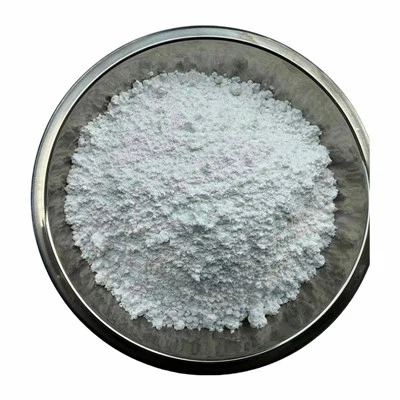


Hey there! I'm a supplier of 1000 Mesh Silica Powder, and today I want to chat about how this awesome product interacts with other chemicals.
First off, let's understand what 1000 Mesh Silica Powder is. The "1000 mesh" refers to the fineness of the powder. A higher mesh number means a finer powder. This fine - grained silica powder has a large surface area, which makes it highly reactive in chemical interactions.
Interaction with Acids
When 1000 Mesh Silica Powder encounters acids, the reaction depends on the type of acid. With strong acids like hydrochloric acid (HCl), there's usually not a significant direct reaction under normal conditions. Silica (SiO₂) is quite stable and doesn't react readily with HCl. However, in the presence of hydrofluoric acid (HF), things get interesting. HF can react with silica to form silicon tetrafluoride (SiF₄) and water. The chemical equation is: SiO₂ + 4HF → SiF₄↑+ 2H₂O. This reaction is quite unique because most acids can't break down silica so easily. In industrial applications, this reaction is used in processes like etching glass, where the fine 1000 Mesh Silica Powder can be used to control the reaction rate due to its large surface area.
Interaction with Bases
Bases can also interact with 1000 Mesh Silica Powder. For example, sodium hydroxide (NaOH) can react with silica to form sodium silicate. The reaction is as follows: SiO₂ + 2NaOH → Na₂SiO₃+ H₂O. This reaction is often used in the production of various silicate - based products, such as detergents and adhesives. The fine powder allows for a more efficient reaction, as it can mix better with the base solution.


Interaction with Metals
When it comes to metals, 1000 Mesh Silica Powder can play different roles. In some metal - smelting processes, it can act as a flux. For instance, in the production of iron, silica powder can react with impurities like calcium oxide (CaO) to form a slag. The reaction between silica and calcium oxide is: SiO₂ + CaO → CaSiO₃. This slag can be easily separated from the molten iron, purifying the metal.
In the electronics industry, 1000 Mesh Silica Powder can be used in combination with metals for the production of semiconductor materials. It can improve the thermal and electrical properties of the metal - based components.
Interaction with Organic Compounds
In the field of polymers, 1000 Mesh Silica Powder can be used as a filler. When added to polymers like epoxy resins, it can enhance the mechanical properties of the polymer. The silica powder can interact with the polymer chains through weak intermolecular forces. This interaction can increase the stiffness, hardness, and heat resistance of the polymer. For example, in the production of composite materials for aerospace applications, the addition of 1000 Mesh Silica Powder can improve the performance of the final product.
Comparison with Other Mesh Sizes
It's worth comparing 1000 Mesh Silica Powder with other mesh sizes, like 1500 Mesh Silica Powder, 800 Mesh Silica Powder, and 300 Mesh Silica Powder. The 1500 Mesh powder is even finer than the 1000 Mesh. It has an even larger surface area, which means it can react more quickly and more completely with other chemicals. On the other hand, 800 Mesh and 300 Mesh powders are coarser. They have a smaller surface area, so their reactivity is lower compared to the 1000 Mesh powder. In some applications where a slower reaction rate is needed, these coarser powders might be more suitable.
Applications Based on Chemical Interactions
The chemical interactions of 1000 Mesh Silica Powder open up a wide range of applications. In the construction industry, it can be used in concrete to improve its strength and durability. The silica powder reacts with the calcium hydroxide in the concrete to form additional calcium silicate hydrates, which enhance the structure of the concrete.
In the paint industry, it can be used as a matting agent. The interaction between the silica powder and the paint components can reduce the gloss of the paint, giving it a more matte finish.
Conclusion
So, as you can see, 1000 Mesh Silica Powder has some really interesting chemical interactions with various substances. These interactions make it a versatile product with a wide range of applications. Whether you're in the construction, electronics, or chemical industry, this powder can be a valuable addition to your processes.
If you're interested in purchasing 1000 Mesh Silica Powder or want to discuss how it can fit into your specific needs, don't hesitate to reach out. We're here to help you find the best solution for your projects.
References
- "Chemistry of Silica: Solubility, Polymerization, Colloid and Surface Properties, and Biochemistry" by Ralph K. Iler.
- "Industrial Inorganic Chemistry" by Ulrich Grohmann and others.