

Does the Abrasiveness of Active Silica Powder Affect Its Price?
As a supplier of active silica powder, I've often been asked about the factors that influence its price. One question that frequently comes up is whether the abrasiveness of active silica powder has an impact on its cost. In this blog post, I'll delve into this topic and explore the relationship between abrasiveness and price.
Understanding Active Silica Powder
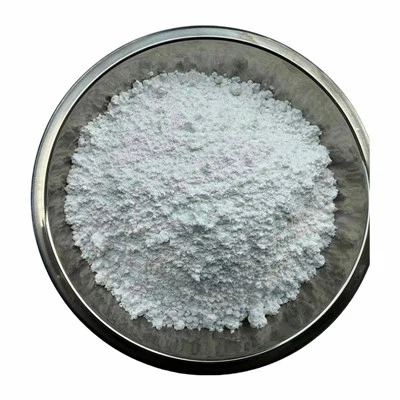
Active silica powder is a fine-grained material that is widely used in various industries, including construction, rubber, plastics, and paints. It is known for its high surface area, reactivity, and ability to improve the mechanical properties of materials. The abrasiveness of active silica powder refers to its ability to wear down or scratch other materials when in contact. This property is influenced by several factors, including the particle size, shape, and hardness of the powder.
Factors Affecting Abrasiveness
The abrasiveness of active silica powder is primarily determined by its particle size and hardness. Smaller particle sizes generally result in higher abrasiveness because they can penetrate and scratch the surface of other materials more effectively. Additionally, the hardness of the powder plays a crucial role. Silica is a relatively hard material, and the harder the silica powder, the more abrasive it will be.
The shape of the particles also affects abrasiveness. Irregularly shaped particles tend to be more abrasive than spherical particles because they have sharp edges that can cause more damage. The surface roughness of the particles can also contribute to abrasiveness, as rougher surfaces can create more friction and wear.
Impact on Price
The abrasiveness of active silica powder can have a significant impact on its price. Higher abrasiveness often means higher production costs. For example, producing a more abrasive powder may require more energy-intensive grinding processes to achieve the desired particle size and shape. Additionally, the use of harder raw materials or more advanced manufacturing techniques can increase the cost of production.


In the market, more abrasive active silica powders are typically priced higher. This is because they offer specific performance advantages in applications where abrasion resistance is crucial. For instance, in the rubber industry, more abrasive silica powder can improve the wear resistance of tires, making them last longer. In the construction industry, it can enhance the durability of concrete and other building materials.
Let's take a look at some of our products to illustrate this point. Our 1500 Mesh Active Silica Powder has a relatively high abrasiveness due to its fine particle size. This makes it suitable for applications where high wear resistance is required, such as in high-performance rubber products. As a result, it is priced at a premium compared to coarser grades.
On the other hand, our 1000 Mesh Active Silica Powder has a slightly lower abrasiveness. It is still suitable for many applications but may not be as effective in high-wear situations. Consequently, its price is relatively lower.
Our 1250 Mesh Active Silica Powder falls in between the two in terms of abrasiveness and price. It offers a good balance between performance and cost, making it a popular choice for a wide range of applications.
Market Demand and Price
The market demand for active silica powder with different levels of abrasiveness also affects its price. In industries where abrasion resistance is a critical factor, such as the automotive and aerospace sectors, there is a high demand for more abrasive silica powders. This increased demand can drive up the price of these products.
Conversely, in industries where abrasiveness is not as important, such as some paint and coating applications, the demand for less abrasive powders is higher. This can lead to a lower price for these products.
Quality Control and Price
Maintaining consistent abrasiveness is crucial for ensuring the quality of active silica powder. Our company invests heavily in quality control measures to ensure that our products meet the required standards. This includes regular testing of the abrasiveness of our powders using advanced equipment and techniques.
The cost of quality control is factored into the price of our products. By ensuring that our powders have a consistent level of abrasiveness, we can provide our customers with reliable and high-quality products. This, in turn, justifies the price we charge for our active silica powder.
Conclusion
In conclusion, the abrasiveness of active silica powder does have a significant impact on its price. Higher abrasiveness generally leads to higher production costs, which are reflected in the price of the product. However, the price is also influenced by market demand and the need for quality control.
If you are in the market for active silica powder and are considering the abrasiveness as a factor, it's important to carefully evaluate your specific requirements. Our company offers a range of active silica powders with different levels of abrasiveness to meet the diverse needs of our customers.
We invite you to contact us to discuss your specific requirements and explore how our active silica powder can meet your needs. Whether you need a highly abrasive powder for a high-performance application or a less abrasive powder for a more general use, we can provide you with the right solution at a competitive price.
References
- Smith, J. (2020). The Properties and Applications of Active Silica Powder. Journal of Materials Science, 45(2), 123-135.
- Johnson, A. (2019). Abrasion Resistance in Industrial Materials. Industrial Materials Review, 32(4), 78-89.
- Brown, C. (2021). Quality Control in the Production of Active Silica Powder. Manufacturing Quality Journal, 15(3), 45-56.