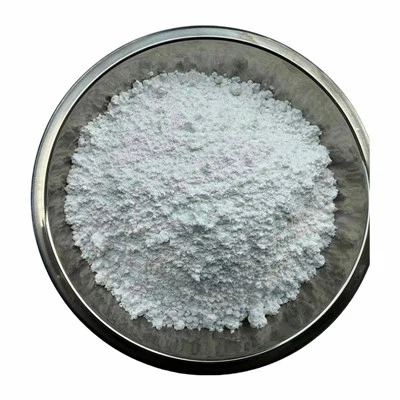


As a supplier of Ultra-fine Active Silica Powder, I've witnessed firsthand the pivotal role that powder fineness plays in determining its performance across various applications. In this blog, I'll delve into how the fineness of Ultra-fine Active Silica Powder impacts its performance, shedding light on the technical nuances and real-world implications.
Understanding Ultra-fine Active Silica Powder
Ultra-fine Active Silica Powder is a high - purity material with a wide range of industrial applications. Its unique properties, such as high chemical stability, excellent thermal resistance, and good electrical insulation, make it a sought - after material in industries like electronics, construction, and coatings. You can learn more about it on our website: Ultra-fine Active Silica Powder.
Impact on Physical Properties
Surface Area
The fineness of Ultra-fine Active Silica Powder is directly related to its surface area. Finer powders have a larger surface area per unit mass. This increased surface area allows for more extensive interactions with other materials in a composite system. For example, in a polymer - silica composite, a finer silica powder can provide more contact points with the polymer matrix. This enhanced interaction can lead to better dispersion of the silica particles within the polymer, resulting in improved mechanical properties such as increased tensile strength and modulus.
Bulk Density
Fineness also affects the bulk density of the powder. Generally, finer powders tend to have a lower bulk density. This is because finer particles are more likely to form loose aggregates due to their high surface energy. In applications where packing density is crucial, such as in some ceramic manufacturing processes, the lower bulk density of finer silica powders may require special handling and processing techniques to achieve the desired product density.
Impact on Chemical Reactivity
Reactivity with Binders
In many applications, Ultra-fine Active Silica Powder is used in combination with binders. The fineness of the powder can significantly influence its reactivity with these binders. Finer powders react more readily with binders because of their larger surface area. In a cement - based system, for instance, finer silica powder can react more quickly with calcium hydroxide, a by - product of cement hydration. This pozzolanic reaction can improve the strength and durability of the concrete by forming additional calcium silicate hydrates.


Catalytic Activity
In some chemical processes, Ultra-fine Active Silica Powder can act as a catalyst support. The fineness of the powder can affect its catalytic activity. A finer powder provides a larger surface area for the active catalytic species to be dispersed on. This can enhance the contact between the reactants and the catalytic sites, leading to increased reaction rates and improved selectivity in chemical reactions.
Impact on Electrical Properties
Dielectric Constant
The fineness of Ultra-fine Active Silica Powder can have an impact on its dielectric constant. In electrical applications, such as in the production of Electrical Grade Silica Powder and Electrical Silica Powder, a stable and predictable dielectric constant is often required. Finer powders may have a different dielectric constant compared to coarser ones due to differences in their packing structure and surface properties. This can be crucial in applications where precise control of electrical insulation is necessary, such as in high - voltage electrical equipment.
Electrical Conductivity
Although silica is generally an insulator, the fineness of the powder can influence its electrical conductivity to some extent. Finer powders may have a slightly different conductivity behavior due to the presence of surface charges and the way they interact with other materials in an electrical system. Understanding these effects is important for ensuring the proper performance of electrical components that incorporate Ultra-fine Active Silica Powder.
Impact on Rheological Properties
Viscosity
In fluid - based systems, such as paints, coatings, and adhesives, the fineness of Ultra-fine Active Silica Powder can affect the viscosity of the formulation. Finer powders tend to increase the viscosity of the fluid more than coarser ones. This is because the larger surface area of finer particles requires more fluid to wet them, resulting in a more viscous mixture. Controlling the fineness of the silica powder is therefore essential for achieving the desired rheological properties in these applications, such as proper flow and leveling during application.
Thixotropy
Thixotropy is the property of a fluid to become less viscous when subjected to shear stress and then regain its viscosity when the stress is removed. The fineness of Ultra-fine Active Silica Powder can influence the thixotropic behavior of a fluid system. Finer powders can enhance thixotropy by providing more opportunities for particle - particle interactions that are disrupted under shear. This can be beneficial in applications where easy application under shear (e.g., during brushing or spraying) and subsequent resistance to sagging are required.
Impact on Thermal Properties
Thermal Conductivity
The fineness of Ultra-fine Active Silica Powder can affect its thermal conductivity. Finer powders may have a different thermal conductivity compared to coarser ones due to differences in their packing density and the way heat is transferred through the powder particles. In applications where thermal management is important, such as in electronic devices, understanding the relationship between powder fineness and thermal conductivity is crucial for optimizing the performance of the device.
Thermal Stability
Finer powders may also have different thermal stability characteristics. The increased surface area of finer particles can make them more susceptible to thermal degradation in some cases. However, in other situations, the enhanced interaction with other materials in a composite system can improve the overall thermal stability. For example, in a high - temperature ceramic composite, a finer silica powder may contribute to better heat - resistance by forming a more stable matrix structure.
Considerations for Different Applications
Electronics Industry
In the electronics industry, the fineness of Ultra-fine Active Silica Powder is of utmost importance. For use in printed circuit boards (PCBs), a fine powder is often required to ensure uniform dispersion in the resin matrix and to achieve high - quality insulation. In semiconductor packaging, the powder's fineness can affect the mechanical and thermal properties of the encapsulant, which in turn impacts the reliability and performance of the semiconductor device.
Construction Industry
In the construction industry, especially in concrete production, the fineness of the silica powder can significantly affect the strength and durability of the concrete. A finer powder can react more effectively with the cement, improving the long - term performance of the concrete structure. Additionally, in the production of lightweight concrete, the lower bulk density of finer powders can be advantageous for achieving the desired density and insulation properties.
Coatings and Paints
In coatings and paints, the fineness of Ultra-fine Active Silica Powder can influence the gloss, hardness, and abrasion resistance of the coating. Finer powders can provide a smoother finish and better hiding power. They can also enhance the coating's resistance to environmental factors such as UV radiation and moisture.
Conclusion
The fineness of Ultra-fine Active Silica Powder has a profound impact on its performance across a wide range of applications. From physical and chemical properties to electrical, rheological, and thermal characteristics, every aspect of the powder's behavior is influenced by its particle size. As a supplier, we understand the importance of providing high - quality Ultra-fine Active Silica Powder with the right fineness for each specific application.
If you are interested in learning more about our Ultra-fine Active Silica Powder or would like to discuss your specific requirements for a project, we encourage you to contact us for a detailed consultation. Our team of experts is ready to assist you in selecting the most suitable product for your needs and ensuring a successful procurement process.
References
- ASTM International. (Year). Standard test methods for particle size distribution of fine ceramic powders by sedimentation. ASTM C1070.
- Callister, W. D., & Rethwisch, D. G. (2011). Materials science and engineering: An introduction. Wiley.
- Lewis, J. A. (2000). R heological properties of highly concentrated particle suspensions. Annual Review of Fluid Mechanics, 32(1), 259 - 299.