Ceramic-Grade Quartz Filler | Technical Product Specification & Procurement Guide
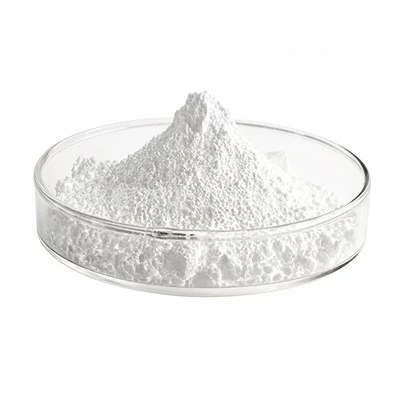
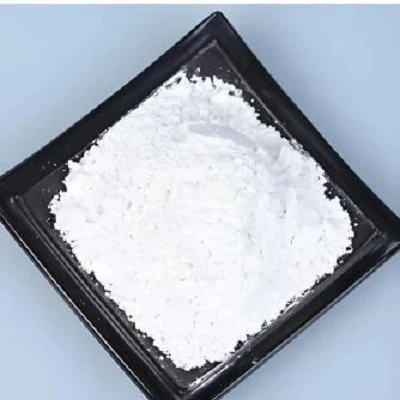
Ceramic-Grade Quartz Filler is processed from selected high-purity quartz veins, featuring low iron content, controlled particle size distribution, and high thermal stability. Designed for industrial ceramic formulations, it acts as a stable framework mineral in bodies and an effective filler in glazes and technical composites.
Key Features
Low Iron Content (Fe₂O₃): Minimized iron oxides prevent unwanted discoloration, black spots, or fluxing anomalies during high-temperature firing.
Controlled Particle Distribution: Precision air-classified grading ensures uniform packing density and predictable drying/firing shrinkage.
High Chemical Purity: High SiO₂ content ensures chemical inertness and resistance to acid-base attack in ceramic matrices.
Batch Consistency: Strict raw material sorting and automated milling lines maintain stable physical-chemical properties across production lots.
Good Dispersion: Low moisture content and uniform morphology allow rapid wet and dry blending without agglomeration.
Technical Specifications
|
Property |
Typical Value |
Test Standard / Method |
|
SiO₂ Content |
≥ 99.3% |
XRF / ICP-OES |
|
Fe₂O₃ Content |
≤ 0.02% |
XRF / ICP-OES |
|
Particle Size (D₅₀) |
Custom (10 μm - 45 μm) |
Laser Diffraction (ISO 13320) |
|
Particle Size (D₉₀) |
< 75 μm (depending on grade) |
Laser Diffraction (ISO 13320) |
|
Moisture Content |
≤ 0.2% |
Oven Drying (105°C, 2h) |
|
Whiteness (L value)* |
≥ 90 |
Hunter Lab Colorimeter |
|
Bulk Density |
1.4 - 1.6 g/cm³ |
ASTM C29 |
Applications
Ceramic Bodies: Used in porcelain, sanitaryware, and tile bodies to control thermal expansion and reduce drying/firing deformation.
Glazes & Frits: Functions as a silica source in glaze formulations to adjust melting behavior and surface hardness.
Technical Ceramics: Applied in silica-based refractory components and technical ceramic matrices requiring high thermal shock resistance.
Polymer Composites: Utilized as a functional mineral filler in epoxy resins and engineered stone where low oil absorption and hardness are required.
Quality Control
Raw Material Verification: Incoming quartz blocks are sorted by optical inspection and multi-stage magnetic separation to remove iron-bearing impurities.
In-Process Monitoring: Continuous laser particle size analyzers integrated into the milling line ensure real-time grading accuracy and stable D₅₀/D₉₀ control.
Lot Traceability: Each production batch is sampled, tested for chemical and physical parameters, and retained for 12 months.
Documentation: A Certificate of Analysis (COA) specifying SiO₂, Fe₂O₃, and particle distribution data is issued with every shipment.
Packaging & Supply
Packaging Options: 25 kg multi-wall paper bags, 1-metric-ton jumbo bags (PP woven with inner PE liner), or customized palletized shrink-wrapped configurations.
Particle Customization: Tailored D₅₀ cuts available upon request for specific rheological or packing requirements.
Sample Provision: 1 kg to 5 kg laboratory test samples available for formulation trials.
Supply Capacity: Stable year-round output backed by dedicated quartz reserves and multi-line milling capacity.
FAQ
Q: What is the exact iron (Fe₂O₃) level in standard grades?
A: Standard ceramic grades maintain Fe₂O₃ below 0.02%. Ultra-low iron grades (< 0.008%) are available for high-whiteness sanitaryware and specialty glazes.
Q: Can you provide customized particle size distributions?
A: Yes. Using adjustable air classifiers, we can supply precise D₅₀ targets ranging from 10 μm to 45 μm to match your milling or casting process.
Q: How do you ensure batch-to-batch consistency?
A: We utilize automated feeding systems, magnetic separators, and online laser diffraction monitoring. Every batch is tested against strict internal tolerances before packaging.
Q: What is the standard minimum order quantity (MOQ)?
A: Standard MOQ is 1 metric ton (1 pallet of 25kg bags or 1 jumbo bag). Trial orders for formulation testing start at 100 kg.
Q: What shipping documents are provided with export orders?
A: Commercial Invoice, Packing List, Bill of Lading, Certificate of Origin (Form E / CO upon request), and a batch-specific Certificate of Analysis (COA).
Q: How are samples requested for laboratory evaluation?
A: Submit your required particle size range and target application through our inquiry form. Samples are typically dispatched via express courier within 3 business days.
Request a Quote
To receive a technical proposal, price quotation, and sample matching your requirements, please provide the following details:
Target Particle Size / D₅₀:
Maximum Allowable Fe₂O₃ Limit:
Estimated Annual or Monthly Consumption:
Application Scenario (e.g., Tile Body, Glaze, Resin Composite):
Destination Port (CIF) or Delivery Address (FOB/EXW):
[Submit Inquiry / Request Sample]
Hot Tags: ceramic-grade quartz filler, China ceramic-grade quartz filler manufacturers, suppliers, factory