


High-Purity Silica Powder for Ceramic Applications
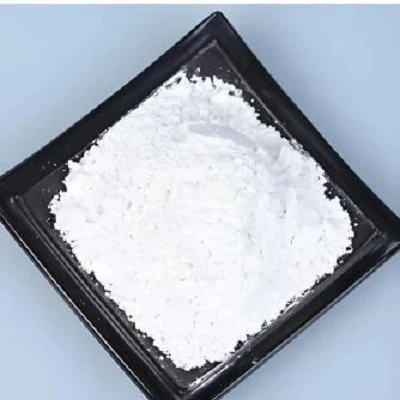
Industrial-grade quartz/silica powder designed for ceramic glazes, sanitaryware bodies, tile formulations, and technical ceramics. Processed from selected natural quartz rock with strict iron impurity control and repeatable particle size distribution.
-
![Silica Raw Material For Ceramic Production]() Silica Raw Material For Ceramic ProductionIndustrial-grade silica raw material processed for ceramic body and glaze manufacturing. Sourced from high-purity quartz deposits and refined via magnetic separation, precision grinding, and air
-
![Ceramic-Grade Quartz Filler]() Ceramic-Grade Quartz FillerCeramic-Grade Quartz Filler is processed from selected high-purity quartz veins, featuring low iron content, controlled particle size distribution, and high thermal stability. Designed for industrial
-
![Quartz Powder For Technical Ceramics]() Quartz Powder For Technical CeramicsHigh-Purity Quartz Powder is engineered specifically for technical and advanced ceramic applications. Produced from selected high-grade quartz crystals and high-purity silica sand via precision
-
![Fine Silica Filler For Ceramic Compounds]() Fine Silica Filler For Ceramic CompoundsEngineered for advanced ceramic bodies, glazes, and high-performance resin systems, this fine silica filler is processed through precision grinding, air classification, and advanced magnetic
-
![Quartz Powder For Ceramic Bodies]() Quartz Powder For Ceramic BodiesThis quartz powder serves as the rigid skeletal framework in ceramic green bodies, preventing excessive deformation and shrinkage during drying and high-temperature firing. Sourced from high-grade
-
![Quartz Powder For Ceramic Glazes]() Quartz Powder For Ceramic GlazesThis industrial-grade quartz powder is processed specifically for ceramic glaze and frits manufacturing. Utilizing high-purity natural quartz ore, the production process involves magnetic separation,


Product Overview
Silica (SiO₂) acts as the primary glass-forming matrix and skeletal structure in ceramic body and glaze formulations.
This ceramic-grade silica powder is produced through optical sorting, iron-removal magnetic separation, and fine ball milling with ceramic linings. It controls thermal expansion, improves mechanical strength, and minimizes fired color variation across production lots.
Key Features
Low-Iron Contamination:
Magnetic separation processes reduce Fe₂O₃ levels to below 0.02% (or custom thresholds), preventing black specks, localized pinholes, and color shifts after firing.
01
Controlled Particle Size Distribution:
Milled to tight tolerances (ranging from 200 mesh to 1250 mesh / D₅₀ from 25 μm to 3 μm) to ensure predictable reaction kinetics during sintering.
02
Controlled Fired Whiteness:
Maintains consistent Lab* color values after firing at standard ceramic temperatures (1180°C - 1280°C).
03
Low Moisture Content:
Dried to < 0.3% moisture before packaging to prevent agglomeration and maintain accurate weighing in batching systems.
04
Contamination-Free Milling:
Ground using high-density alumina lining and ceramic grinding media to eliminate metallic iron contamination during pulverization.
05
Technical Specifications
Below are standard ceramic grades. Custom mesh sizes and purity specifications are available upon request.
|
Parameter |
Standard Glaze Grade |
High-Whiteness Body Grade |
Fine Micronized Grade |
Testing Method |
|
SiO₂ Content |
≥ 99.2% |
≥ 98.5% |
≥ 99.5% |
XRF / Wet Chemical |
|
Fe₂O₃ Content |
≤ 0.025% |
≤ 0.05% |
≤ 0.015% |
ICP-OES |
|
Al₂O₃ Content |
≤ 0.30% |
≤ 0.60% |
≤ 0.20% |
XRF |
|
TiO₂ Content |
≤ 0.02% |
≤ 0.04% |
≤ 0.01% |
XRF |
|
Loss on Ignition (LOI) |
≤ 0.20% |
≤ 0.30% |
≤ 0.15% |
1000°C Gravimetric |
|
Moisture Content |
≤ 0.30% |
≤ 0.50% |
≤ 0.20% |
Moisture Analyzer |
|
Particle Size (D₅₀) |
12 - 18 μm (325 mesh) |
25 - 35 μm (200 mesh) |
3 - 5 μm (1250 mesh) |
Laser Diffraction (ISO 13320) |
|
325 Mesh Residue |
≤ 0.05% |
≤ 1.5% |
0.00% |
Wet Sieving |
|
Fired Whiteness (1220°C) |
≥ 90% |
≥ 85% |
≥ 93% |
Whiteness Meter |
Applications
Ceramic Glazes & Frits:
Acts as the principal glass-former. Prevents thermal shock cracking, enhances scratch resistance, and delivers a stable base for opaque, glossy, or matte finishes.
Sanitaryware & Tableware Bodies:
Forms the refractory skeleton during firing, reducing pyro-plastic deformation, stabilizing thermal expansion, and controlling drying shrinkage.
Wall & Floor Tiles:
Used in porcelain tile bodies to regulate vitrification and increase final flexural strength.
Technical & Electrical Ceramics:
Micronized grades serve as raw materials for alumina-silica technical ceramics, steatite bodies, and electrical insulators requiring stable dielectric properties.
Refractories & Kiln Furniture:
Used in thermal-resistant refractory mixes and mortars requiring high thermal stability.
Quality Control & Manufacturing Process
Manufacturing Workflow
Raw Material Selection: High-purity quartz rock sourced from verified deposit layers.
Crushing & Optical Sorting: Automated optical sorters remove discolored stone, feldspar, and country rock before processing. (Visual Proof: Automated Optical Sorting Equipment)
Multi-Stage Iron Removal: High-intensity electromagnetic separators (10,000+ Gauss) clear free iron at both coarse crushing and fine milling stages. (Visual Proof: High-Gauss Electromagnetic Separators)
Ceramic-Lined Grinding: Ball mills fitted with high-alumina linings and alumina balls prevent equipment-induced contamination. (Visual Proof: Alumina-Lined Ball Mills)
Air Classification: Closed-loop air classifiers control upper cut-off limits (D₉₇/D₉₉) and eliminate oversized particles.
Quality Assurance
Batch Sampling: Samples are collected every 2 hours during continuous production for PSD and moisture checks.
XRF & Chemical Verification: XRF analysis verifies elemental chemical composition per production run.
Certificate of Analysis (COA): Every shipped lot includes a COA covering SiO₂, Fe₂O₃, particle size distribution, and moisture level.

Standard Packaging:
1.25 kg multi-wall paper bags / PE valve bags (palletized and shrink-wrapped).
2.1.0 MT or 1.2 MT FIBC jumbo bags with bottom discharge spout and moisture-proof PE liner. (Visual Proof: Palletized Jumbo Bags Ready for Export)
Customization:
Custom bag labeling, hydrophobic packaging for damp transit conditions, and tailored particle size cuts available.
Production Capacity:
Monthly supply capacity of 8,000 metric tons.
Sample Policy:
Free 1 kg to 5 kg evaluation samples available for laboratory testing and trial runs (freight forwarder account required or prepaid freight).
Frequently Asked Questions

Request a Quote & Technical Samples
To receive a formal quotation, Technical Data Sheet (TDS), or evaluation sample, please submit your target parameters below. Our technical engineering team responds within 24 business hours.
Information Checklist for Fast Quote Matching:
Target Mesh / Particle Size (D₅₀ or Mesh size): (e.g., 325 mesh / D₅₀ = 15 μm)
Maximum Allowable Fe₂O₃ Content: (e.g., < 0.02%)
Application Scenario: (e.g., Sanitaryware glaze, porcelain tile body, technical ceramics)
Estimated Monthly / Annual Consumption: (e.g., 50 MT / month)
Destination Port / Delivery Term: (e.g., FOB Qingdao, CIF Hamburg, DDP Ohio)
[Request Free 1–5 kg Sample] [Request Bulk Price Quote]
We're well-known as one of the leading silica powder for ceramics manufacturers and suppliers in China. Welcome to buy high quality silica powder for ceramics made in China here and get free sample from our factory. For price consultation, contact us.
Popular Products


