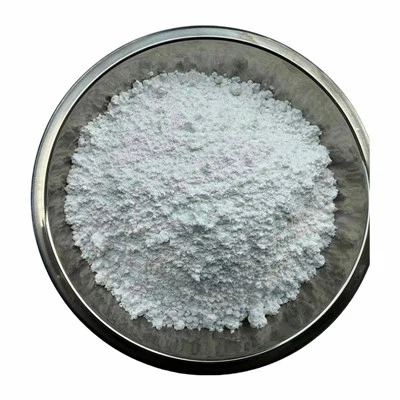


Silica powder, a fine granular form of silicon dioxide, has long been a staple in various industrial applications. Its unique physical and chemical properties make it a versatile material, and one of the industries where it has found significant use is the rubber industry. As a supplier of 1500 Mesh Silica Powder, I am often asked whether this specific grade can be effectively used in the rubber industry. In this blog post, I will delve into the characteristics of 1500 Mesh Silica Powder and explore its potential applications in the rubber sector.
Understanding Mesh Size and Silica Powder
Before we discuss the suitability of 1500 Mesh Silica Powder for the rubber industry, it's essential to understand what the term "mesh" means in the context of silica powder. Mesh size refers to the number of openings per linear inch in a sieve through which the powder is screened. A higher mesh number indicates a finer powder with smaller particle sizes. For instance, 800 Mesh Silica Powder has relatively larger particles compared to 1500 Mesh Silica Powder, which has much finer particles.


The particle size of silica powder plays a crucial role in determining its properties and applications. Finer particles generally have a larger surface area, which can lead to enhanced reactivity and better dispersion in a matrix. This is particularly important in the rubber industry, where the interaction between the filler (such as silica powder) and the rubber matrix can significantly affect the performance of the final rubber product.
Properties of 1500 Mesh Silica Powder
1500 Mesh Silica Powder possesses several properties that make it potentially suitable for use in the rubber industry. Firstly, its fine particle size allows for excellent dispersion within the rubber matrix. When well - dispersed, the silica particles can form a strong interface with the rubber molecules, improving the overall mechanical properties of the rubber compound.
Secondly, silica powder has high chemical stability. It is resistant to heat, oxidation, and many chemicals, which can enhance the durability and longevity of rubber products. In applications where the rubber is exposed to harsh environmental conditions, such as high temperatures or chemical agents, the addition of 1500 Mesh Silica Powder can help maintain the integrity of the rubber.
Another important property is its reinforcement ability. Silica powder can act as a reinforcing filler in rubber compounds. By increasing the cross - linking density between rubber molecules and the filler particles, it can improve the tensile strength, tear resistance, and abrasion resistance of the rubber. This is especially beneficial in applications such as tires, conveyor belts, and industrial seals, where high mechanical performance is required.
Applications of 1500 Mesh Silica Powder in the Rubber Industry
Tire Manufacturing
Tires are one of the most significant applications of silica powder in the rubber industry. The use of 1500 Mesh Silica Powder in tire tread compounds can improve the wet grip and rolling resistance of tires. The fine particles of 1500 Mesh Silica Powder can form a large contact area with the road surface, enhancing the friction between the tire and the road in wet conditions. At the same time, it can also reduce the internal heat generation of the tire during rolling, which in turn reduces the rolling resistance and improves fuel efficiency.
Conveyor Belts
Conveyor belts are widely used in industries such as mining, manufacturing, and logistics. They need to have high abrasion resistance, tear strength, and load - bearing capacity. The addition of 1500 Mesh Silica Powder to the rubber compound of conveyor belts can significantly improve these properties. The fine silica particles can reinforce the rubber matrix, making the conveyor belt more resistant to wear and tear caused by the movement of materials on the belt surface.
Industrial Seals
Industrial seals are used to prevent the leakage of fluids or gases in various mechanical systems. They need to have good sealing performance, chemical resistance, and mechanical strength. 1500 Mesh Silica Powder can enhance the mechanical properties of the rubber used in seals, such as hardness and elasticity. Its chemical stability also helps the seals resist the attack of chemicals, ensuring long - term reliable operation.
Comparison with Other Mesh Sizes
When considering the use of silica powder in the rubber industry, it's important to compare 1500 Mesh Silica Powder with other mesh sizes, such as 800 Mesh Silica Powder and 1250 Mesh Silica Powder.
800 Mesh Silica Powder, with its relatively larger particle size, may not disperse as well in the rubber matrix as 1500 Mesh Silica Powder. This can lead to uneven reinforcement and potentially lower mechanical performance of the rubber compound. On the other hand, 1500 Mesh Silica Powder can provide a more uniform and effective reinforcement due to its finer particles.
Compared to 1250 Mesh Silica Powder, 1500 Mesh Silica Powder has an even finer particle size, which can result in a higher surface area and better reactivity. This can lead to improved interaction with the rubber molecules and enhanced performance of the rubber product. However, the choice between these mesh sizes also depends on the specific requirements of the rubber application. For some applications where a coarser filler is acceptable, 1250 Mesh Silica Powder may be a more cost - effective option.
Challenges and Considerations
While 1500 Mesh Silica Powder offers many advantages for the rubber industry, there are also some challenges and considerations to keep in mind. One of the main challenges is the dispersion of the fine powder in the rubber matrix. Due to its high surface area, 1500 Mesh Silica Powder has a tendency to agglomerate, which can lead to poor dispersion and reduced performance of the rubber compound. Special dispersion techniques, such as the use of dispersing agents or high - shear mixing processes, may be required to ensure proper dispersion.
Another consideration is the cost. Finer mesh silica powders generally have a higher production cost compared to coarser ones. This can increase the overall cost of the rubber product. Therefore, a cost - benefit analysis is necessary to determine whether the use of 1500 Mesh Silica Powder is economically viable for a particular application.
Conclusion
In conclusion, 1500 Mesh Silica Powder has significant potential for use in the rubber industry. Its fine particle size, chemical stability, and reinforcement ability make it suitable for a variety of rubber applications, including tire manufacturing, conveyor belts, and industrial seals. While there are challenges such as dispersion and cost to be addressed, with proper processing techniques and cost - benefit analysis, it can be a valuable addition to rubber compounds.
If you are interested in learning more about our 1500 Mesh Silica Powder and its potential applications in your rubber products, please feel free to contact us for further discussion and procurement negotiations. We are committed to providing high - quality silica powder products and excellent technical support to meet your specific needs.
References
- ASTM International. (Year). Standard test methods for rubber products.
- Rubber World Magazine. (Year). Advances in rubber compounding with silica fillers.
- Journal of Applied Polymer Science. (Year). Influence of silica particle size on the properties of rubber composites.