



As a supplier of Electronic Silica Powder, I understand the critical importance of addressing compatibility problems in various applications. Electronic Silica Powder is widely used in industries such as electronics, semiconductors, and coatings due to its excellent properties like high purity, low thermal expansion coefficient, and good electrical insulation. However, compatibility issues can often arise, affecting the performance and quality of the final products. In this blog, I will share some effective ways to solve the compatibility problems of Electronic Silica Powder.
Understanding Compatibility Problems
Before delving into solutions, it's essential to understand the root causes of compatibility problems. Compatibility issues can occur at different stages, from the mixing process to the long - term stability of the final product.
1. Chemical Compatibility
Electronic Silica Powder may react with other chemicals in the formulation. For example, in a coating system, it might react with certain solvents or resins, leading to changes in the physical and chemical properties of the mixture. This can result in issues such as phase separation, reduced adhesion, or changes in viscosity.
2. Physical Compatibility
The particle size and shape of Electronic Silica Powder can also cause compatibility problems. If the particle size is not well - matched with the matrix material, it may result in poor dispersion. Agglomeration of particles can occur, which can lead to uneven distribution in the final product, affecting its mechanical and electrical properties.
Solutions to Compatibility Problems
1. Surface Treatment
One of the most effective ways to improve the compatibility of Electronic Silica Powder is through surface treatment. By modifying the surface of the silica powder, we can enhance its interaction with the matrix material. For instance, silane coupling agents can be used to treat the surface of the powder. These agents have functional groups that can react with both the silica surface and the matrix material, creating a strong chemical bond. This not only improves the dispersion of the powder but also enhances the adhesion between the powder and the matrix.
Ultra - fine Active Silica Powder, available at Ultra - fine Active Silica Powder, is a good example of surface - treated silica powder. It has been treated to have better compatibility with various polymers and resins, making it suitable for a wide range of applications.
2. Particle Size Control
Controlling the particle size of Electronic Silica Powder is crucial for achieving good compatibility. Different applications require different particle sizes. For example, in some high - precision electronic applications, ultrafine silica powder is preferred. Ultrafine Silica Powder, as introduced at Ultrafine Silica Powder, has a very small particle size, which allows for better dispersion in the matrix material. By carefully selecting the appropriate particle size, we can reduce the risk of agglomeration and improve the overall compatibility.
3. Compatibility Testing
Before using Electronic Silica Powder in a specific application, it is necessary to conduct compatibility testing. This involves mixing the powder with the matrix material under different conditions and observing the changes in properties. For example, we can test the viscosity, adhesion, and mechanical strength of the mixture. Based on the test results, we can adjust the formulation or the processing parameters to optimize the compatibility.
4. Formulation Optimization
Optimizing the formulation is another important step in solving compatibility problems. This includes adjusting the ratio of Electronic Silica Powder to other components in the mixture. For example, in a composite material, the amount of silica powder should be carefully controlled to ensure that it does not cause excessive viscosity or phase separation. By working closely with our customers, we can develop customized formulations that meet their specific requirements.
Case Studies
Let's take a look at some real - world examples of how these solutions have been applied to solve compatibility problems.
Case 1: Coating Application
A customer in the coating industry was experiencing problems with the dispersion of Electronic Silica Powder in their paint formulation. The powder was agglomerating, leading to a rough surface finish and reduced coating performance. We recommended using surface - treated Ultra - fine Active Silica Powder. After replacing the original powder with the treated one, the dispersion improved significantly, and the coating had a smooth surface and better adhesion.

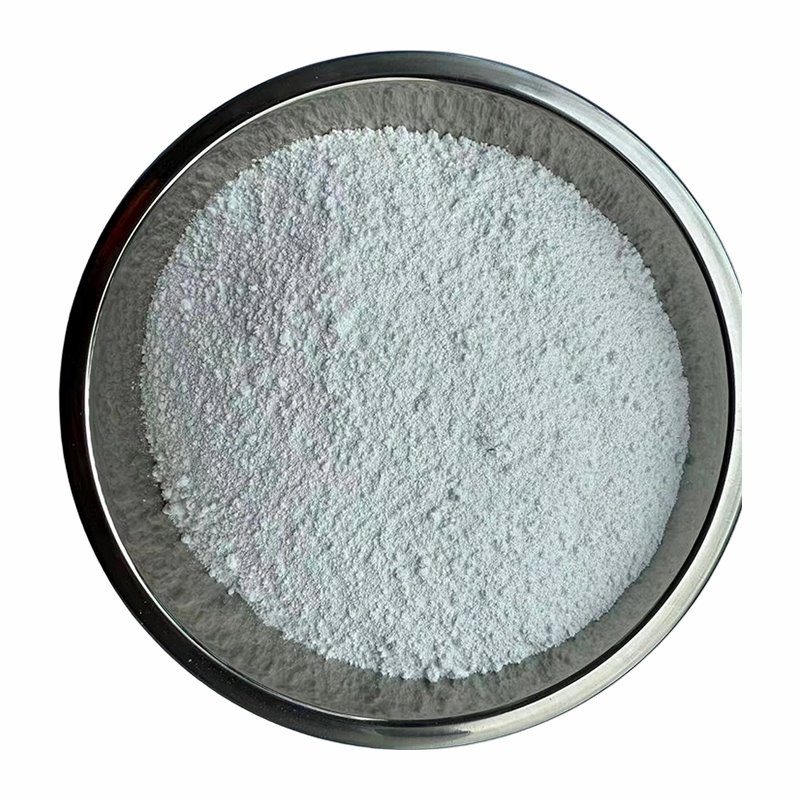
Case 2: Electronic Packaging
In an electronic packaging application, the customer was facing compatibility issues between the Electronic Silica Powder and the epoxy resin. The thermal expansion mismatch was causing cracks in the packaging material. By carefully selecting the particle size of the silica powder and optimizing the formulation, we were able to reduce the thermal expansion coefficient of the composite material, eliminating the cracking problem.
Conclusion
Solving the compatibility problems of Electronic Silica Powder requires a comprehensive approach that includes surface treatment, particle size control, compatibility testing, and formulation optimization. As a supplier of Electronic Silica Powder, we are committed to providing high - quality products and technical support to help our customers overcome these challenges.
If you are facing compatibility problems with Electronic Silica Powder or are interested in exploring its applications, we invite you to contact us for further discussion and potential procurement. Our team of experts is ready to assist you in finding the best solutions for your specific needs.
References
- Smith, J. (2018). "Advances in Silica Powder Technology for Electronic Applications". Journal of Materials Science.
- Johnson, A. (2019). "Surface Treatment of Silica Powders for Improved Compatibility". International Journal of Composite Materials.
- Brown, C. (2020). "Particle Size Effects on the Compatibility of Silica Powders in Polymer Matrices". Journal of Applied Chemistry.


