



Hey there! As a supplier of fused silica powder from a factory, I often get asked about the coefficient of thermal expansion of our product. So, I thought I'd take a moment to break it down for you.
First off, let's talk a bit about what fused silica powder is. It's a high - purity form of silica that's made by melting quartz sand at extremely high temperatures and then rapidly cooling it. This process gives it some really cool properties, and one of the most important ones is its coefficient of thermal expansion.
The coefficient of thermal expansion (CTE) is a measure of how much a material expands or contracts when its temperature changes. It's usually expressed in parts per million per degree Celsius (ppm/°C). For most materials, when you heat them up, they expand, and when you cool them down, they contract. This can be a big deal in a lot of applications because if different materials in a system have different CTEs, it can lead to stress, cracking, or even failure of the whole setup.
Now, the CTE of fused silica powder is incredibly low. In fact, it's one of the lowest among all common materials. The typical coefficient of thermal expansion for fused silica powder is around 0.5 - 0.6 ppm/°C. That's super low compared to other substances. For example, steel has a CTE of around 11 - 13 ppm/°C, and aluminum has a CTE of about 23 ppm/°C.
Why is this low CTE so important? Well, in industries like electronics, where components are often exposed to temperature changes during operation, having a material with a low CTE is crucial. Our fused silica powder can be used as a filler in electronic packaging materials. When the electronic device heats up during use, the low - expanding fused silica powder helps to keep the overall package from expanding too much. This reduces the stress on the delicate electronic components inside and helps to prevent things like solder joint failures or cracking of the packaging.
In the optical industry, it's also a game - changer. Optical lenses and mirrors need to maintain their shape and dimensions very precisely. Temperature changes can cause normal materials to distort, which would mess up the optical performance. But with fused silica powder, because of its low CTE, optical components made with it can stay stable over a wide range of temperatures. This is especially important for high - precision applications like telescopes, microscopes, and lasers.

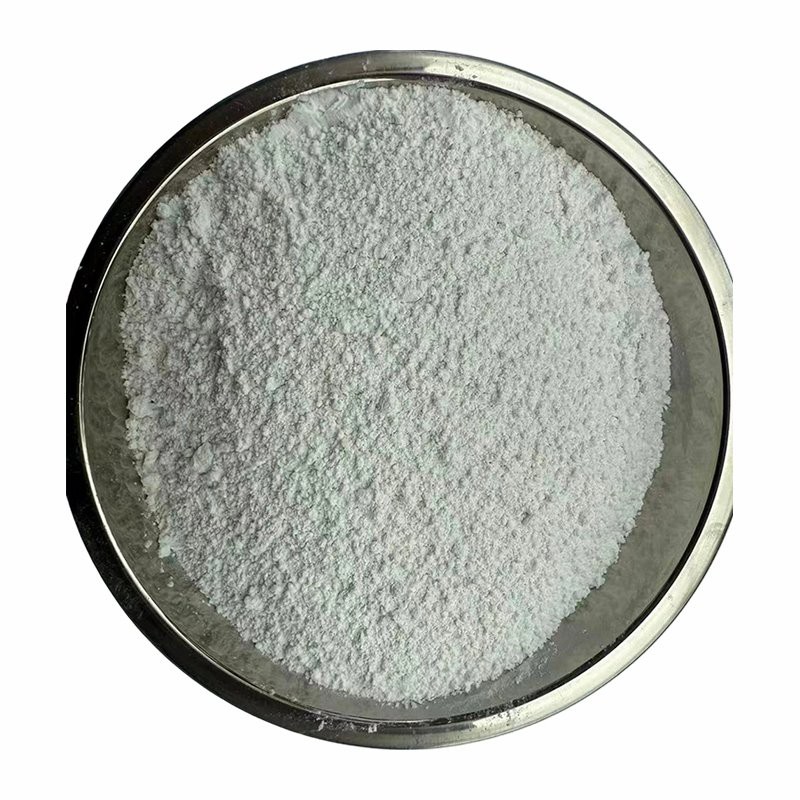
We offer different mesh sizes of fused silica powder, each with its own unique characteristics. For instance, our 1200 Mesh Fused Silica Powder has a relatively fine particle size. The smaller particle size can lead to better dispersion in a matrix material, which can enhance the overall performance of the composite. It's great for applications where a smooth surface finish is required, like in some high - end coatings.
Our 2000 Mesh Fused Silica Powder is even finer. This ultra - fine powder can be used in applications where extremely high precision and low thermal expansion are needed, such as in some advanced semiconductor manufacturing processes.
And then there's our 1000 Mesh Fused Silica Powder. It strikes a balance between particle size and cost - effectiveness. It's a popular choice for a wide range of applications, from general - purpose electronic packaging to some construction materials where thermal stability is important.
The low CTE of our fused silica powder also makes it suitable for use in aerospace applications. In space, temperatures can vary wildly, from extremely cold in the shadow of a planet to very hot when exposed to direct sunlight. Components made with our fused silica powder can withstand these temperature swings without significant expansion or contraction, which is essential for the reliability of aerospace systems.
Another advantage of our fused silica powder is its chemical purity. High - purity fused silica powder has excellent chemical resistance, which means it won't react easily with other substances in its environment. This further enhances its suitability for use in harsh chemical or high - temperature environments.
When it comes to production, we take great care to ensure the quality and consistency of our fused silica powder. We use advanced manufacturing processes to control the particle size distribution, purity, and other properties. This way, you can be confident that every batch of our fused silica powder will have the same low CTE and other desirable characteristics.
If you're in an industry that requires materials with low thermal expansion, our fused silica powder could be the perfect solution for you. Whether you're in electronics, optics, aerospace, or any other field where thermal stability is a concern, we've got the right product for you.
So, if you're interested in learning more about our fused silica powder or want to discuss your specific application needs, don't hesitate to reach out. We're here to help you find the best - fitting product for your project. Let's have a chat and see how our fused silica powder can make a difference in your business.
References:
- "Handbook of Materials Science and Engineering"
- "Advanced Materials for High - Tech Applications"
- Industry research reports on thermal properties of materials


