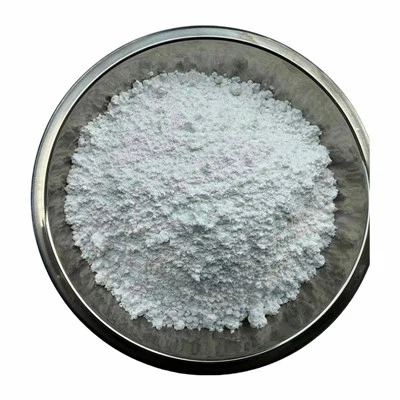


Hey there! As a supplier of 1000 Mesh Silica Powder, I often get asked about the particle size of this stuff. So, I thought I'd write a blog post to clear things up and give you all the deets.
What Does "Mesh" Mean?
First off, let's talk about what "mesh" actually means in the context of silica powder. The term "mesh" refers to the number of openings per linear inch in a sieve. For example, a 1000 Mesh sieve has 1000 openings per inch. The higher the mesh number, the smaller the particles that can pass through the sieve.
So, when we say 1000 Mesh Silica Powder, we're talking about a powder where the particles are small enough to pass through a sieve with 1000 openings per inch. But what does that translate to in terms of actual particle size?
Calculating Particle Size from Mesh
To figure out the particle size of 1000 Mesh Silica Powder, we need to use a conversion formula. There are a few different formulas out there, but a commonly used one is based on the relationship between mesh size and particle diameter.
The approximate particle size (in micrometers) can be calculated using the formula: Particle Size (μm) = 15000 / Mesh Number.
For 1000 Mesh Silica Powder, if we plug the number into the formula, we get: 15000 / 1000 = 15 micrometers. So, the average particle size of 1000 Mesh Silica Powder is around 15 micrometers.
It's important to note that this is just an approximation. In reality, the particle size distribution in a batch of 1000 Mesh Silica Powder can vary. There will be some particles that are slightly larger or smaller than the calculated average.
Why Particle Size Matters
The particle size of silica powder can have a big impact on its performance in different applications. For example, in the coatings industry, a finer particle size like that of 1000 Mesh Silica Powder can lead to a smoother finish. The smaller particles can fill in tiny gaps and pores, resulting in a more uniform and glossy surface.
In the plastics industry, the particle size affects the mechanical properties of the final product. Smaller particles can improve the strength and stiffness of plastic composites. They can also enhance the dispersion of the silica powder in the plastic matrix, leading to better overall performance.
Comparing with Other Mesh Sizes
Let's take a look at how 1000 Mesh Silica Powder compares to other common mesh sizes. For instance, 400 Mesh Silica Powder has a larger particle size. Using the same formula (15000 / 400), we find that the approximate particle size is 37.5 micrometers. This coarser powder is often used in applications where a more rugged or textured surface is desired, such as in some types of abrasives.
On the other hand, 2000 Mesh Silica Powder has an even smaller particle size. Calculating with the formula (15000 / 2000), we get an average particle size of 7.5 micrometers. This ultra - fine powder is used in high - performance applications like electronics, where precision and smoothness are crucial.
Another popular option is 1250 Mesh Silica Powder. Using the formula (15000 / 1250), the approximate particle size is 12 micrometers. It offers a balance between the fineness of 2000 Mesh and the coarseness of 1000 Mesh, making it suitable for a wide range of applications.
Quality Control of 1000 Mesh Silica Powder
As a supplier, I understand the importance of quality control when it comes to 1000 Mesh Silica Powder. We use advanced screening and testing methods to ensure that the particle size distribution is within the desired range. This includes using laser diffraction particle size analyzers, which can provide accurate and detailed information about the size of the particles in our powder.


We also conduct other quality checks, such as analyzing the chemical composition of the silica powder. This ensures that it meets the required purity standards for different applications. For example, in the pharmaceutical industry, high - purity silica powder is essential to ensure the safety and effectiveness of the final product.
Applications of 1000 Mesh Silica Powder
1000 Mesh Silica Powder has a wide range of applications. In the construction industry, it can be used as an additive in concrete to improve its strength and durability. The small particles can fill in the voids between the cement particles, making the concrete more compact and resistant to cracking.
In the paint and coatings industry, it can be used as a filler to improve the abrasion resistance and gloss of the coating. The fine particles can also help to reduce the viscosity of the paint, making it easier to apply.
In the rubber industry, 1000 Mesh Silica Powder can be used as a reinforcing filler. It can improve the mechanical properties of the rubber, such as its tensile strength and tear resistance.
Conclusion and Call to Action
So, now you know all about the particle size of 1000 Mesh Silica Powder and its many applications. If you're in the market for high - quality 1000 Mesh Silica Powder, or if you have any questions about our products, don't hesitate to reach out. We're here to help you find the right solution for your specific needs. Whether you're a small business or a large corporation, we can provide you with the quantity and quality of silica powder you require. Let's start a conversation and see how we can work together!
References
- ASTM International. Standard Test Methods for Particle Size Distribution of Ceramic Whiteware Clays by the Sedimentation Method. ASTM C325 - 18.
- Perry, R. H., & Green, D. W. (Eds.). (2008). Perry's Chemical Engineers' Handbook. McGraw - Hill.