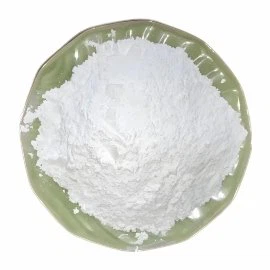

Hey there! As a supplier of 1250 Mesh Silica Powder, I often get asked about the refractive index of this product. So, let's dive right into it and explore what the refractive index of 1250 Mesh Silica Powder is all about.
First off, what exactly is the refractive index? Well, it's a measure of how much a ray of light bends when it passes from one medium to another. In the case of silica powder, the refractive index tells us how light behaves when it interacts with the powder. It's an important property because it can affect how the powder is used in various applications, like in coatings, plastics, and even optical devices.
The refractive index of silica powder can vary depending on a few factors. One of the main factors is the purity of the silica. High - purity silica powder usually has a more consistent refractive index. For 1250 Mesh Silica Powder, the refractive index typically falls in the range of around 1.45 - 1.47. This value is pretty standard for silica materials, but it can still be influenced by other things.
Another factor that can impact the refractive index is the particle size. The 1250 Mesh specification means that the powder has a relatively fine particle size. Finer particles can sometimes lead to a slightly different interaction with light compared to coarser particles. When the particles are smaller, there are more surfaces for the light to interact with, which can affect the overall refractive behavior.
Now, let's talk about why the refractive index matters in real - world applications. In the coatings industry, for example, the refractive index of the silica powder can affect the gloss and transparency of the coating. If the refractive index of the silica powder matches well with the resin in the coating, it can result in a smooth, clear finish. In plastics, the refractive index can influence the optical properties of the final product, like how it looks and how it scatters light.
If you're in the market for silica powder, you might also be interested in other mesh sizes. We also offer 800 Mesh Silica Powder, 600 Mesh Silica Powder, and 1500 Mesh Silica Powder. Each of these mesh sizes has its own unique properties and applications.
The 800 Mesh Silica Powder is a bit coarser than the 1250 Mesh. It might be more suitable for applications where a slightly rougher texture or different optical properties are needed. The 600 Mesh is even coarser and can be used in applications where you need a more abrasive or bulk - filling material. On the other hand, the 1500 Mesh Silica Powder is finer than the 1250 Mesh, which can be great for applications that require a very smooth finish or high - precision optical properties.
When it comes to choosing the right silica powder for your needs, the refractive index is just one of the factors to consider. You also need to think about the particle size, purity, and how it will interact with other materials in your application. For example, if you're using the silica powder in a polymer, you need to make sure it has good compatibility with the polymer matrix.
We take pride in providing high - quality 1250 Mesh Silica Powder. Our powder is carefully processed to ensure a consistent refractive index and particle size. We use advanced manufacturing techniques to control the quality of the powder at every step of the production process. This means that you can rely on our product to meet your specific requirements.
If you're interested in learning more about our 1250 Mesh Silica Powder or any of our other products, don't hesitate to reach out. Whether you're a small - scale manufacturer or a large - scale industrial user, we're here to help you find the right silica powder for your application. We can provide samples for you to test, and our team of experts can offer advice on how to use the powder effectively.


In conclusion, the refractive index of 1250 Mesh Silica Powder is an important property that can have a big impact on its performance in various applications. By understanding this property and how it relates to your specific needs, you can make a more informed decision when choosing a silica powder. If you have any questions or want to discuss your requirements further, feel free to get in touch. We're looking forward to working with you and helping you find the perfect silica powder solution.
References
- "Handbook of Silica Science and Technology", various authors
- "Optical Properties of Inorganic Materials", John Wiley & Sons