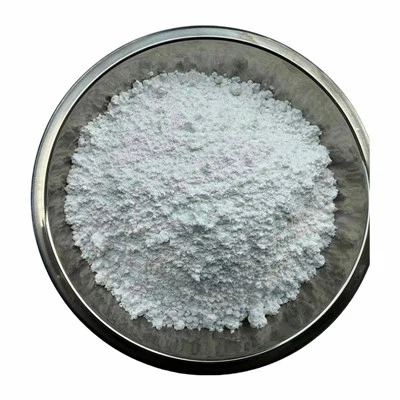


Hey there! As a supplier of 1250 Mesh Silica Powder, I often get asked about the sedimentation rate of this product in liquids. It's a crucial topic, especially for those in industries like coatings, adhesives, and plastics, where the behavior of silica powder in liquid media can significantly impact the final product's quality. So, let's dive right in and explore what the sedimentation rate of 1250 Mesh Silica Powder in liquids is all about.
First off, let's understand what "1250 Mesh" means. The mesh size refers to the number of openings per linear inch in a sieve through which the powder can pass. A 1250 Mesh Silica Powder is extremely fine, with particles so small that they can offer unique properties in various applications. But this fineness also plays a big role in how it behaves when mixed with liquids.
The sedimentation rate of a powder in a liquid is essentially how fast the particles settle to the bottom of the container. It's influenced by several factors, and one of the most important ones is the particle size. Smaller particles, like those in 1250 Mesh Silica Powder, tend to have a slower sedimentation rate compared to coarser powders. This is because smaller particles experience more resistance from the liquid as they move through it, and they also have a larger surface - area - to - volume ratio, which increases the interaction between the particles and the liquid.
Another factor that affects the sedimentation rate is the density of the silica powder and the liquid. Silica has a relatively high density, but the overall sedimentation behavior depends on the difference in density between the powder and the liquid. If the liquid is denser, the sedimentation rate will be slower, and vice versa. For example, in a high - density liquid like glycerol, the 1250 Mesh Silica Powder may settle more slowly than in water.
The viscosity of the liquid is also a key player. A more viscous liquid offers more resistance to the movement of the powder particles. So, if you mix 1250 Mesh Silica Powder in a thick, syrupy liquid, the sedimentation rate will be much slower compared to a thin, watery liquid. This is why in some applications, thickeners are added to the liquid to control the sedimentation of the powder and keep it evenly dispersed for longer.
Now, let's compare the sedimentation rate of 1250 Mesh Silica Powder with other mesh sizes. We have 400 Mesh Silica Powder, 1000 Mesh Silica Powder, and 1500 Mesh Silica Powder. The 400 Mesh Silica Powder has much larger particles, so it will sediment much faster than the 1250 Mesh powder. On the other hand, the 1500 Mesh Silica Powder has even smaller particles than the 1250 Mesh, and thus, it will generally have an even slower sedimentation rate. The 1000 Mesh falls in between, with a sedimentation rate that is faster than the 1250 Mesh but slower than the 400 Mesh.
In practical applications, understanding the sedimentation rate is vital. In the paint industry, for example, if the silica powder settles too quickly, it can lead to an uneven distribution of the powder in the paint, resulting in a poor - quality finish. Manufacturers need to ensure that the powder remains well - dispersed throughout the storage and application process. They might use additives or mechanical agitation to control the sedimentation rate.
In the adhesives industry, the sedimentation rate affects the bonding strength and the consistency of the adhesive. If the silica powder settles prematurely, it can cause variations in the adhesive's properties, leading to weak bonds. So, formulators need to carefully select the right mesh size and control the sedimentation rate to achieve the desired performance.
To measure the sedimentation rate of 1250 Mesh Silica Powder in a liquid, you can use a simple experiment. Take a clear container, fill it with the liquid of your choice, and then add a known amount of the silica powder. Stir the mixture well and then start a timer. Observe how long it takes for the powder to start settling and how long it takes for a significant amount of the powder to reach the bottom of the container. You can also measure the height of the sediment layer at different time intervals to get a more accurate picture of the sedimentation process.
It's important to note that the sedimentation rate can also be affected by external factors such as temperature and pressure. Higher temperatures can reduce the viscosity of the liquid, which may increase the sedimentation rate. Similarly, changes in pressure can also influence the behavior of the liquid and the powder particles.
As a supplier of 1250 Mesh Silica Powder, I've seen firsthand how important it is for our customers to have a good understanding of the sedimentation rate. That's why we're always here to provide technical support and advice. Whether you're a small - scale manufacturer or a large - scale industrial user, we can help you choose the right product and optimize its performance in your applications.
If you're interested in learning more about our 1250 Mesh Silica Powder or have any questions regarding its sedimentation rate in specific liquids, don't hesitate to reach out. We're eager to have a chat with you and discuss how our product can meet your needs. Whether you're looking to improve the quality of your coatings, adhesives, or any other products, we're here to assist you every step of the way.
In conclusion, the sedimentation rate of 1250 Mesh Silica Powder in liquids is a complex but important topic. It's influenced by particle size, density, viscosity, and external factors. By understanding these factors, you can better control the behavior of the powder in your applications and achieve the best possible results. So, if you're in the market for high - quality 1250 Mesh Silica Powder, give us a shout, and let's start a conversation about how we can work together.
References


- "Powder Technology Handbook" by M. N. Rahaman
- "Colloidal Dispersions" by R. J. Hunter