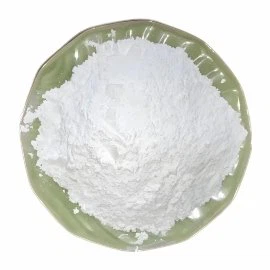

Hey there! As a supplier of 2000 Mesh Silica Powder, I often get asked about its specific surface area. So, I thought I'd write this blog to share some insights on this topic.
First off, let's understand what specific surface area means. In simple terms, it's the total surface area of a material per unit of mass. For powders like our 2000 Mesh Silica Powder, this is a crucial property. Why? Well, a larger specific surface area means more surface is available for chemical reactions, adsorption, and other interactions. This can have a big impact on how the powder performs in different applications.
Now, when it comes to the specific surface area of 2000 Mesh Silica Powder, it's influenced by a few key factors. One of the main ones is the particle size. The "2000 Mesh" in the name gives us a clue about the particle size. Mesh is a measure of how many openings there are in a sieve per linear inch. So, a 2000 Mesh powder has very fine particles because it can pass through a sieve with 2000 openings per inch.
Generally, as the particle size gets smaller, the specific surface area increases. This is because smaller particles have a higher surface - to - volume ratio. Think of it like this: if you take a big block of silica and break it into tiny pieces, the total surface area of all those tiny pieces will be much larger than the surface area of the original block.
For 2000 Mesh Silica Powder, the specific surface area typically ranges from around 5 to 15 square meters per gram (m²/g). But this can vary depending on a few other things. The shape of the particles matters. If the particles are more spherical, they'll have a smaller specific surface area compared to irregularly shaped particles. Also, the manufacturing process can affect it. Different methods of grinding and processing can lead to different particle characteristics and thus different specific surface areas.
Let's compare 2000 Mesh Silica Powder with some other common mesh sizes. We have 400 Mesh Silica Powder. This coarser powder has a much larger particle size. As a result, its specific surface area is typically lower, usually in the range of 1 - 3 m²/g. On the other hand, 1500 Mesh Silica Powder has a particle size between 400 Mesh and 2000 Mesh, and its specific surface area is also in between, around 3 - 8 m²/g.
So, why does the specific surface area of 2000 Mesh Silica Powder matter in real - world applications? Well, in industries like coatings, a higher specific surface area can improve the adhesion of the coating to the substrate. The powder can better interact with the binder in the coating, leading to a more durable and high - quality finish.


In the rubber industry, 2000 Mesh Silica Powder with a suitable specific surface area can act as a reinforcing filler. It can enhance the mechanical properties of the rubber, such as its strength and abrasion resistance. The large surface area allows for better bonding between the silica powder and the rubber matrix.
In the field of cosmetics, the specific surface area affects the powder's ability to absorb oils and moisture. A powder with a higher specific surface area can be more effective at keeping the skin dry and matte.
As a supplier of 2000 Mesh Silica Powder, we take great care in ensuring the quality and consistency of the specific surface area of our product. We use advanced manufacturing techniques and quality control measures to make sure that each batch of powder meets the desired specifications.
If you're in an industry that could benefit from 2000 Mesh Silica Powder, I'd encourage you to get in touch. Whether you're looking for a powder with a specific surface area for a particular application or just want to learn more about our product, we're here to help. We can provide samples for you to test and see how our powder performs in your processes.
In conclusion, the specific surface area of 2000 Mesh Silica Powder is an important property that can have a significant impact on its performance in various industries. Understanding this property can help you make better decisions when it comes to choosing the right powder for your needs. So, don't hesitate to reach out if you're interested in discussing your requirements further.
References:
- "Powder Technology Handbook"
- Industry research reports on silica powder applications