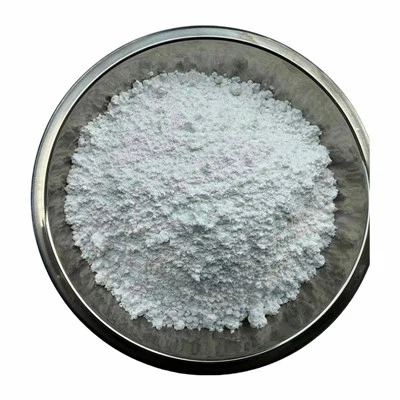


What is the surface area of 1000 Mesh Silica Powder?
As a supplier of 1000 Mesh Silica Powder, I often encounter questions from customers about the surface area of this product. Understanding the surface area of silica powder is crucial as it directly impacts its performance in various applications. In this blog, we will delve into the concept of surface area in relation to 1000 Mesh Silica Powder, explore how it is measured, and discuss its significance in different industries.
Understanding Mesh Size and Its Relationship with Surface Area
Before we dive into the surface area of 1000 Mesh Silica Powder, it's important to understand what the term "mesh" means. Mesh size refers to the number of openings per linear inch in a sieve. For example, a 1000 Mesh sieve has 1000 openings per inch. The higher the mesh number, the smaller the particle size of the powder. In the case of 1000 Mesh Silica Powder, the particles are extremely fine, which has a direct impact on its surface area.
The relationship between mesh size and surface area is inverse. As the mesh size increases (i.e., the particle size decreases), the surface area per unit mass of the powder increases. This is because smaller particles have a greater total surface area compared to larger particles of the same mass. For instance, if you have a block of silica and break it down into smaller and smaller pieces, the total surface area of all the pieces combined will be much larger than the surface area of the original block.
Measuring the Surface Area of 1000 Mesh Silica Powder
There are several methods to measure the surface area of silica powder, with the Brunauer - Emmett - Teller (BET) method being one of the most commonly used techniques. The BET method is based on the physical adsorption of gas molecules on the surface of the powder. By measuring the amount of gas adsorbed at different pressures, the surface area of the powder can be calculated.
When it comes to 1000 Mesh Silica Powder, the BET surface area can vary depending on factors such as the manufacturing process, purity of the silica, and the presence of any surface treatments. Generally, 1000 Mesh Silica Powder has a relatively high surface area due to its fine particle size. This high surface area gives it unique properties that make it suitable for a wide range of applications.
Significance of Surface Area in Different Industries
The surface area of 1000 Mesh Silica Powder plays a crucial role in various industries. Let's take a look at some of the key industries where the surface area of this powder is of great importance.


1. Rubber and Plastics Industry
In the rubber and plastics industry, 1000 Mesh Silica Powder is often used as a reinforcing filler. The high surface area of the powder allows it to interact more effectively with the polymer matrix, improving the mechanical properties of the rubber or plastic. For example, it can enhance the tensile strength, tear resistance, and abrasion resistance of the final product. The large surface area also helps in better dispersion of the powder in the polymer, resulting in a more homogeneous material.
2. Paints and Coatings Industry
In paints and coatings, 1000 Mesh Silica Powder is used to improve the performance of the coating. The high surface area of the powder can increase the hiding power, gloss, and durability of the paint. It can also help in reducing the settling of pigments and improving the flow properties of the coating. Additionally, the surface area of the silica powder can affect its ability to absorb and release moisture, which is important for the long - term stability of the coating.
3. Adhesives and Sealants Industry
In adhesives and sealants, the surface area of 1000 Mesh Silica Powder is critical for its adhesion properties. The large surface area allows for better bonding with the substrate, resulting in stronger and more durable adhesives and sealants. It can also improve the rheological properties of the adhesive or sealant, making it easier to apply and ensuring a uniform bond.
Comparison with Other Mesh Sizes
To better understand the significance of the surface area of 1000 Mesh Silica Powder, it's useful to compare it with other mesh sizes. For example, 400 Mesh Silica Powder has a larger particle size compared to 1000 Mesh Silica Powder. As a result, its surface area per unit mass is lower. This means that 400 Mesh Silica Powder may not have the same level of interaction with polymers or other materials as 1000 Mesh Silica Powder.
Similarly, 800 Mesh Silica Powder has a surface area that is between that of 400 Mesh and 1000 Mesh Silica Powder. Each mesh size has its own advantages and is suitable for different applications. The choice of mesh size depends on the specific requirements of the end - product.
Our Offerings as a Supplier
As a supplier of 1000 Mesh Silica Powder, we ensure that our product meets the highest quality standards. We use advanced manufacturing processes to produce silica powder with a consistent particle size and high surface area. Our 1000 Mesh Silica Powder is carefully tested to ensure its performance in various applications.
We understand that different customers have different requirements, and we are committed to providing customized solutions. Whether you need a specific surface area, purity level, or particle size distribution, we can work with you to meet your needs. Our team of experts is always available to provide technical support and advice on the best use of our 1000 Mesh Silica Powder.
Conclusion
The surface area of 1000 Mesh Silica Powder is a critical factor that determines its performance in various industries. Its high surface area, due to its fine particle size, gives it unique properties that make it suitable for a wide range of applications. Whether you are in the rubber and plastics, paints and coatings, or adhesives and sealants industry, understanding the surface area of 1000 Mesh Silica Powder can help you make informed decisions about its use.
If you are interested in purchasing 1000 Mesh Silica Powder or have any questions about its surface area or applications, please feel free to contact us. We look forward to discussing your requirements and providing you with the best solutions.
References
- Brunauer, S., Emmett, P. H., & Teller, E. (1938). Adsorption of gases in multimolecular layers. Journal of the American Chemical Society, 60(2), 309 - 319.
- Van Vlack, L. H. (1989). Elements of Materials Science and Engineering. Addison - Wesley.