



Hey there! As a supplier of Ultra-fine Active Silica Powder, I often get asked about its thermal conductivity. So, I thought I'd take a deep dive into this topic and share what I know.
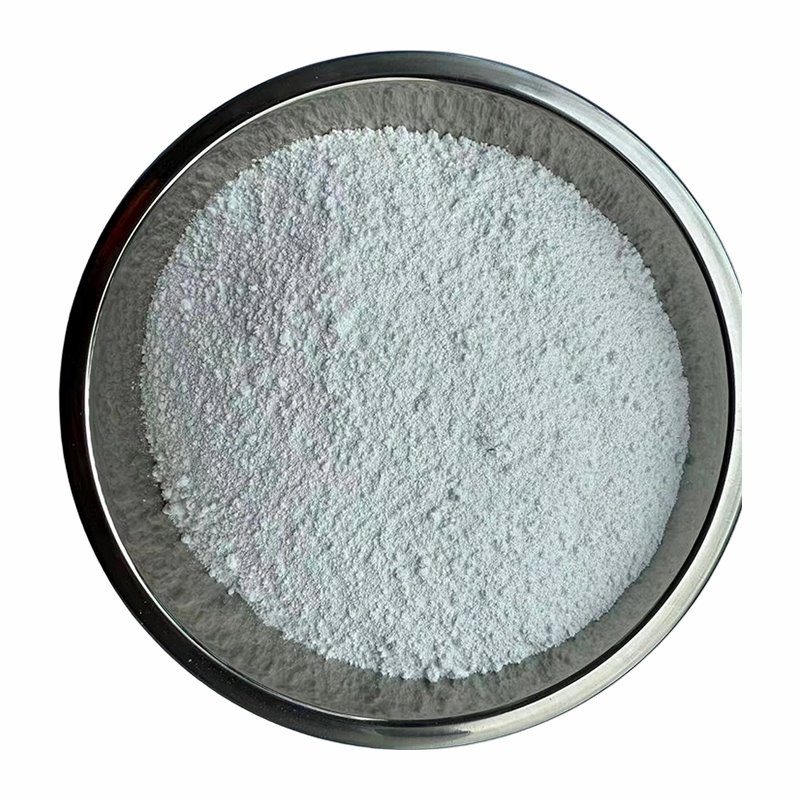
First off, let's talk a bit about Ultra-fine Active Silica Powder itself. It's a high - performance material that has a wide range of applications. You can check out more details about it on our website: Ultra-fine Active Silica Powder. This powder is known for its ultra - fine particle size and high activity, which gives it some unique properties compared to regular silica powders.
Now, onto the main question: what is the thermal conductivity of Ultra-fine Active Silica Powder? Thermal conductivity is a measure of a material's ability to conduct heat. In simple terms, it tells us how fast heat can move through a substance. For Ultra-fine Active Silica Powder, its thermal conductivity is influenced by several factors.
One of the key factors is the particle size. Since it's ultra - fine, the small particle size can have an impact on how heat is transferred. Smaller particles generally have a larger surface area to volume ratio. This means that there are more contact points between the particles, which can either enhance or impede heat transfer depending on the packing density and the nature of the interfaces between the particles.
Another factor is the purity of the powder. Higher purity Ultra-fine Active Silica Powder tends to have more consistent thermal properties. Impurities can act as scattering centers for heat carriers (like phonons in solids), reducing the overall thermal conductivity. So, when we produce our powder, we pay a lot of attention to maintaining high purity levels to ensure stable thermal performance.
The structure of the powder also plays a role. Ultra-fine Active Silica Powder can have different crystal structures or amorphous states. Amorphous silica, for example, may have a different thermal conductivity compared to crystalline silica. The internal arrangement of atoms in these structures affects how heat is propagated through the material.
In general, the thermal conductivity of Ultra-fine Active Silica Powder is relatively low compared to some metals. Metals are known for their high thermal conductivity because they have a large number of free electrons that can carry heat efficiently. In contrast, silica powder mainly relies on phonon - mediated heat transfer. Phonons are quantized lattice vibrations, and their movement through the powder is what transfers heat.
The low thermal conductivity of Ultra-fine Active Silica Powder makes it a great choice for applications where heat insulation is required. For instance, in the electronics industry, it can be used as a filler in electronic packaging materials. Electronic Silica Powder is often used in this context. By adding Ultra-fine Active Silica Powder to the packaging materials, we can help prevent heat from spreading too quickly, which is crucial for protecting sensitive electronic components from overheating.
It's also used in the electrical industry. Electrical Silica Powder applications benefit from its low thermal conductivity as well. In electrical insulation materials, it helps to keep the heat generated by electrical currents from causing damage to the insulation or other components.
To measure the thermal conductivity of Ultra-fine Active Silica Powder, we use specialized equipment. There are different measurement techniques available, such as the transient plane source method or the hot wire method. These methods allow us to accurately determine the thermal conductivity under different conditions, like different temperatures and pressures.
When we conduct these measurements, we also take into account the sample preparation. The way the powder is packed or formed into a sample can affect the results. For example, if the powder is compressed too tightly, it may change the contact between the particles and thus the thermal conductivity. So, we follow strict procedures to ensure that the samples are prepared in a consistent and reproducible way.
The thermal conductivity of Ultra-fine Active Silica Powder can also vary with temperature. Generally, as the temperature increases, the thermal conductivity may change. At low temperatures, the phonon - phonon scattering is relatively weak, and the thermal conductivity may increase with temperature to some extent. But at higher temperatures, the increased phonon - phonon scattering can cause the thermal conductivity to start decreasing.
Now, if you're in an industry that could benefit from the unique thermal properties of Ultra-fine Active Silica Powder, we'd love to have a chat with you. Whether you're in electronics, electrical, or other fields where heat management is important, our Ultra-fine Active Silica Powder could be a great fit for your applications.
We have a team of experts who can work with you to understand your specific requirements and provide you with the right grade of powder. We can also offer technical support to help you optimize the use of our product in your processes. So, if you're interested in learning more or starting a procurement discussion, don't hesitate to reach out.

In conclusion, Ultra-fine Active Silica Powder has a complex relationship with thermal conductivity, influenced by particle size, purity, structure, and other factors. Its low thermal conductivity makes it a valuable material in many industries, especially those related to electronics and electrical applications.
References:
- "Introduction to Thermal Physics" by Daniel V. Schroeder
- "Materials Science and Engineering: An Introduction" by William D. Callister Jr. and David G. Rethwisch


