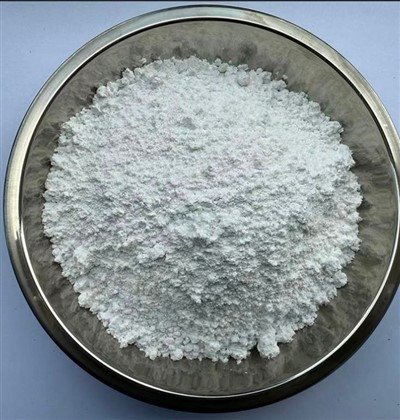
Low-Iron Fine Quartz Powder | Technical Data & B2B Supply Specifications
Quick Summary for Procurement & R&D:
High-purity functional silica mineral filler (SiO₂ ≥ 99.5%, Fe₂O₃ ≤ 0.015%–0.03%) produced via non-metallic grinding, ceramic-lined air classification, and high-intensity magnetic separation. Engineered for epoxy casting, electrical insulation bushings, technical ceramics, and high-translucency glazes where dielectric breakdown strength, thermal expansion control, and zero-coloration are critical.
Product Overview
Low-Iron Fine Quartz Powder is a refined, chemically inert silica additive processed from ultra-pure quartz deposits. Manufactured strictly in an iron-free processing environment, it offers tight particle size distribution (D₅₀ / D₉₀), minimal moisture absorption, and low iron content.
It serves as a functional matrix filler to lower the Coefficient of Thermal Expansion (CTE), reduce exothermic heat peaks during resin curing, enhance mechanical hardness, and maintain high dielectric isolation in demanding formulations.
Key Technical Advantages & Differentiation
Iron-Free Grinding Process: Milled using high-purity alumina/silica equipment and non-metallic grinding media to eliminate tramp iron pickup.
Trace Metal Impurity Control: Ultra-low iron content (Fe₂O₃ ≤ 0.015%) prevents optical yellowing in glazes and eliminates dielectric breakdown paths in high-voltage epoxy insulation.
Controlled Particle Size Distribution (PSD): Closed-loop air classification creates tight particle packing, preventing unexpected viscosity spikes during polymer mixing.
Low Surface Moisture (≤ 0.1%): Prevents particle agglomeration and eliminates hydrolytic degradation risks in polyurethane and epoxy systems.
Traceable Batch Consistency: Every production lot is verified via ICP-OES elemental analysis and Laser Particle Size Analysis (ISO 13320) prior to dispatch.
Technical Specifications
|
Parameter |
Standard Industrial Grade |
High-Purity Grade |
Test Method / Standard |
|
SiO₂ Content |
≥ 99.5% |
≥ 99.8% |
XRF / ICP-OES |
|
Fe₂O₃ Content |
≤ 0.03% |
≤ 0.015% |
ICP-OES |
|
Al₂O₃ Content |
≤ 0.15% |
≤ 0.08% |
ICP-OES |
|
Particle Size (D₅₀) |
5.0 μm–45.0 μm (Customizable) |
2.0 μm–20.0 μm (Customizable) |
Laser Diffraction (ISO 13320) |
|
Particle Size (D₉₀) |
≤ 15.0 μm–90.0 μm |
≤ 8.0 μm–45.0 μm |
Laser Diffraction (ISO 13320) |
|
Moisture Content |
≤ 0.10% |
≤ 0.08% |
ASTM C566 |
|
Whiteness (L*) |
≥ 93.0 |
≥ 95.0 |
Spectrophotometer |
|
Specific Gravity |
2.65 g/cm³ |
2.65 g/cm³ |
Pycnometer Method |
|
pH (10% aqueous slurry) |
6.5–7.5 |
6.5–7.5 |
ISO 787-9 |
Key Applications & Formulation Function
Epoxy Casting & Electrical Potting Compounds
Primary Function: High loading capacity filler for medium- and high-voltage components (insulators, transformers, switchgear).
Formulation Benefit: Reduces CTE to match metallic conductors, dissipates exothermic curing heat, and maintains elevated dielectric strength.
Technical Ceramics & Electronic Substrates
Primary Function: Pure silica matrix in alumina-silica and technical ceramic bodies.
Formulation Benefit: Provides predictable volumetric firing shrinkage, mechanical durability, and tight post-sintering tolerances.
Specialty Ceramic Glazes & Frits
Primary Function: Glass-former in high-translucency, ultra-white ceramic glazes.
Formulation Benefit: Eliminates iron-induced speckling, grey cast, or yellowing in high-temperature firing.
Precision Investment Casting
Primary Function: Refractory flour for foundry ceramic mold construction.
Formulation Benefit: Resists high thermal shock and limits surface reactions with molten metal alloys.
Quality Control & Manufacturing Process
Raw Quartz Ore Inspection
↓
Ceramic-Lined Ball Milling → Multi-Stage Magnetic Separation (15,000 Gauss)
↓
Closed-Loop Air Classification → ICP-OES & Laser PSD Testing
↓
Moisture-Proof Packaging & Lot COA Issuance
Feedstock Selection: Quartz ore is pre-screened for low native iron (Fe₂O₃) and titanium (TiO₂) before processing.
Contamination Control: Electromagnetic separation units continuously extract residual paramagnetic particles down to ppm levels.
Batch Verification: Each 20 MT production batch is issued a Certificate of Analysis (COA) containing exact D₁₀, D₅₀, D₉₀ particle curves and full elemental purity breakdown.
Packaging, Supply & Commercial Terms
Packaging Specs
25 kg paper-plastic composite bags with PE inner liner
1,000 kg / 1,250 kg jumbo bags with UV & moisture barrier
Palletization
Standard 1,000 kg / 1,200 kg fumigated wooden or plastic pallets, stretch-wrapped
Minimum Order Quantity (MOQ)
Sample & Trial Order: 1,000 kg
Standard Commercial Order: 1 × 20' FCL (approx. 20–25 MT)
Production Lead Time
In-stock standard grades: 5–7 business days
Custom particle cuts (D₅₀): 14–21 business days
Quality Verification
Pre-Shipment Sample (PSS) and lot-matched digital COA available prior to container loading
Frequently Asked Questions
Q: How do you guarantee batch-to-batch consistency for Fe₂O₃ content?
A: We enforce strict raw quartz sorting coupled with inline continuous high-gradient magnetic separation (up to 15,000 Gauss). Every lot undergoes ICP-OES testing to verify that Fe₂O₃ remains under the strictly defined specification limit (≤ 0.015% or ≤ 0.03%).
Q: Can you supply custom particle size distributions (D₁₀, D₅₀, D₉₀)?
A: Yes. Our closed-loop air classification systems allow customized top-cut (D₉₈) and mean particle size (D₅₀) adjustments to match your specific rheology, packing density, or viscosity requirements.
Q: Is this quartz powder compatible with silane coupling agents?
A: Yes. The neutral surface pH (6.5–7.5) and clean silica structure provide active surface bonding sites for functional silanes (e.g., epoxy, amino, or vinyl silanes) to enhance mechanical bonding in polymer composites.
Q: What is the procedure for requesting lab trial samples?
A: We provide 1 kg to 5 kg sample kits for analytical evaluation and pilot formulations. Contact our sales engineering team with your required specifications (D₅₀ and iron limits), and samples will ship within 3 business days.
Q: What technical documentation is provided with commercial shipments?
A: Every container shipment includes the Commercial Invoice, Packing List, Bill of Lading, Lot-Specific Certificate of Analysis (COA), and Safety Data Sheet (SDS / REACH compliant).
Q: What is the shelf life and recommended storage environment?
A: When stored in its original unopened moisture-barrier packaging in a cool, dry warehouse, the material has an indefinite shelf life due to its chemically inert mineral nature.
Request a Technical Quote & TDS
To receive a commercial quotation, Certificate of Analysis (COA), or technical recommendation, please provide the following requirements:
Application / Process: (e.g., Epoxy Bushing, Technical Ceramic, Glaze Frit)
Particle Size Target: Target D₅₀ / D₉₀ or mesh size
Maximum Iron Limit: Fe₂O₃ limit required (e.g., ≤ 0.015% or ≤ 0.03%)
Estimated Volume: Trial order volume and annual projected tonnage
Destination Port: Port of entry for CIF / DDP quote calculation
Hot Tags: low-iron fine quartz powder, China low-iron fine quartz powder manufacturers, suppliers, factory