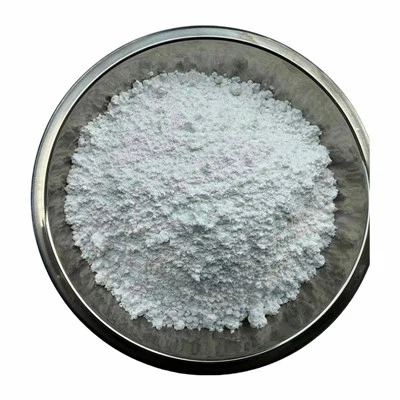


Hey there! As a supplier of active silica powder, I've seen firsthand how the particle size of this stuff can really make or break its performance. It's not just a random number; it has a huge impact on how the powder works in different applications. So, let's dive into how the particle size of active silica powder affects its performance.
Surface Area and Reactivity
One of the most important things to understand is the relationship between particle size and surface area. Smaller particles have a larger surface area per unit mass. Think of it like this: if you have a big block of something and you break it into tiny pieces, the total area of all those little pieces' surfaces is much larger than the surface area of the original block.
In the case of active silica powder, a larger surface area means more active sites for chemical reactions. For example, in a cement or concrete application, the silica powder reacts with calcium hydroxide to form additional calcium - silicate - hydrate (C - S - H) gel. With smaller particle sizes, this reaction happens more quickly and more completely because there are more silica particles available to react. This leads to improved strength and durability of the concrete.
Our 1000 Mesh Active Silica Powder has a very fine particle size, which gives it a large surface area. This makes it highly reactive and ideal for applications where fast and efficient chemical reactions are needed. On the other hand, 400 Mesh Active Silica Powder has a relatively larger particle size and a smaller surface area per unit mass. It's still reactive, but the reaction rate might be a bit slower compared to the 1000 - mesh powder.
Dispersion and Mixing
Particle size also plays a crucial role in how well the active silica powder disperses in a matrix. Smaller particles tend to disperse more easily because they are less likely to agglomerate. Agglomeration is when particles stick together, and it can cause problems in applications.
In a paint or coating formulation, for example, good dispersion of the silica powder is essential for achieving a uniform finish. If the particles are too large or agglomerated, it can lead to a rough or uneven surface. Our 800 Mesh Active Silica Powder strikes a good balance. It's fine enough to disperse well in most coating systems but not so fine that it's difficult to handle.
When mixing the powder with other components, smaller particles can be incorporated more evenly. This is important in composite materials, where the silica powder is used to enhance the mechanical properties. A well - dispersed powder ensures that the reinforcement effect is evenly distributed throughout the material, resulting in consistent performance.
Flowability
The flowability of active silica powder is another aspect affected by particle size. Larger particles generally have better flowability than smaller ones. Smaller particles can be more cohesive, which means they tend to stick to each other and to the walls of containers or processing equipment.
In a manufacturing process where the powder needs to be transferred through pipes or hoppers, good flowability is essential. Our 400 Mesh Active Silica Powder has relatively good flowability due to its larger particle size. This makes it easier to handle in bulk handling systems compared to the finer - meshed powders.
However, if the application requires the powder to fill small spaces or pores, a finer particle size might be more suitable, even though it has poorer flowability. For instance, in some micro - electronic applications where the powder is used to fill tiny gaps between components, the 1000 Mesh Active Silica Powder can be a better choice despite its lower flowability.
Optical Properties
In applications where optical properties are important, such as in clear coatings or plastics, particle size can have a significant impact. Smaller particles scatter less light, which means that materials containing fine - particle silica powder are more likely to be transparent or have better clarity.


If you're making a clear plastic product and you want to add some reinforcement with active silica powder, using a powder with a small particle size like our 1000 Mesh Active Silica Powder can help maintain the transparency of the plastic. In contrast, larger - particle powders can cause more light scattering, which may make the material appear cloudy or opaque.
Abrasion Resistance
Particle size also affects the abrasion resistance of materials when active silica powder is used as a filler. Smaller particles can be more effective at improving abrasion resistance because they can fill in the micro - pores and irregularities on the surface of the material, creating a smoother and more wear - resistant surface.
In a rubber or polymer application, adding a fine - particle active silica powder can enhance the abrasion resistance of the final product. Our 800 Mesh Active Silica Powder can be a great option for this kind of application. It can help the rubber or polymer withstand the wear and tear of everyday use, whether it's in tires, conveyor belts, or other industrial rubber products.
Conclusion
As you can see, the particle size of active silica powder has a wide range of effects on its performance. Whether you're looking for high reactivity, good dispersion, flowability, optical clarity, or abrasion resistance, the right particle size is crucial.
We offer a variety of active silica powders with different particle sizes to meet the diverse needs of our customers. If you're interested in learning more about which powder is best for your specific application or if you want to place an order, don't hesitate to get in touch. We're here to help you find the perfect solution for your project.
References
- Neville, A. M. (1995). Properties of Concrete. Pearson Education.
- Mindess, S., Young, J. F., & Darwin, D. (2003). Concrete: Microstructure, Properties, and Materials. Prentice Hall.
- Fellers, G. A. (2000). Introduction to Polymer Science and Technology: An SPE Textbook. Hanser Gardner Publications.