



Crystallinity is a fundamental property that significantly influences the performance and applications of China fused silica powder. As a leading supplier of this essential material, I am excited to delve into the concept of crystallinity and its implications for our products.
Understanding Crystallinity
Crystallinity refers to the degree of order in the atomic or molecular arrangement of a solid material. In a crystalline substance, the atoms or molecules are arranged in a regular, repeating pattern over long distances. This ordered structure gives rise to distinct physical and chemical properties, such as sharp melting points, high hardness, and anisotropic behavior.
On the other hand, amorphous materials lack long - range order. Their atomic or molecular arrangements are more random, resulting in properties that are often different from those of crystalline materials. For example, amorphous substances typically have a broader melting range and may exhibit isotropic behavior.
Crystallinity of China Fused Silica Powder
China fused silica powder is primarily an amorphous material. It is produced by melting high - purity quartz sand at extremely high temperatures (usually above 1700°C) and then rapidly cooling it. This rapid cooling process prevents the silica molecules from arranging themselves into a crystalline lattice, resulting in an amorphous structure.
The amorphous nature of fused silica powder offers several advantages. Firstly, it has a very low coefficient of thermal expansion. This means that it can withstand large temperature changes without significant dimensional changes. This property makes it ideal for applications in high - temperature environments, such as in the manufacturing of semiconductor components, where thermal stability is crucial.
Secondly, amorphous fused silica powder has excellent chemical resistance. It is resistant to most acids, alkalis, and other corrosive substances. This makes it suitable for use in chemical processing equipment, such as reaction vessels and pipelines.
Influence of Crystallinity on Product Performance
The crystallinity of fused silica powder can have a direct impact on its performance in various applications. In the electronics industry, for instance, the low crystallinity (high amorphousness) of our fused silica powder is essential for its use in encapsulation materials for integrated circuits. The low thermal expansion coefficient helps to prevent cracking and delamination of the encapsulation layer during thermal cycling, ensuring the long - term reliability of the electronic devices.
In the foundry industry, the amorphous structure of fused silica powder contributes to its good flowability and mold - filling properties. When used as a refractory material in casting molds, it can form a smooth and dense layer, which improves the surface finish of the castings and reduces the occurrence of defects.

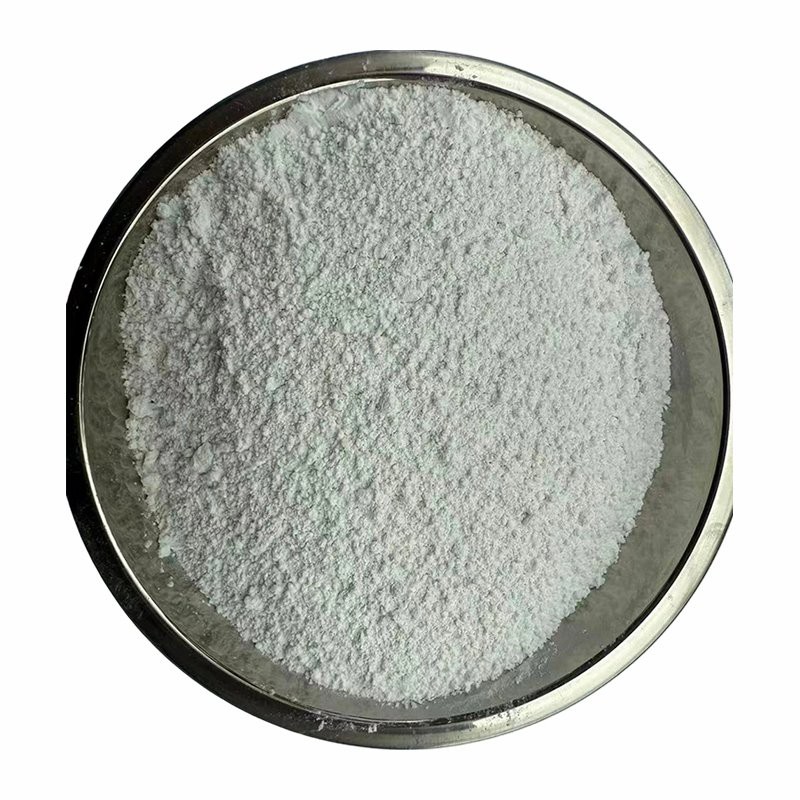
Different Mesh Sizes and Their Applications
We offer China fused silica powder in various mesh sizes, each tailored to specific applications. The 1000 Mesh Fused Silica Powder is extremely fine, with a particle size of approximately 15 microns. This fine powder is often used in high - precision applications, such as in the production of optical lenses and high - performance ceramics. Its small particle size allows for a more uniform distribution in the matrix material, resulting in improved mechanical and optical properties.
The 800 Mesh Fused Silica Powder has a slightly larger particle size, around 20 microns. It is commonly used in the manufacturing of coatings, adhesives, and composites. The larger particle size provides better reinforcement and filling effects, enhancing the strength and durability of the final products.
The 600 Mesh Fused Silica Powder with a particle size of about 25 microns is suitable for applications where a coarser filler is required. It is often used in the production of refractory bricks and mortars, as well as in some types of plastics and rubber compounds.
Quality Control of Crystallinity
As a responsible supplier, we have strict quality control measures in place to ensure the consistent crystallinity (amorphousness) of our fused silica powder. We use advanced analytical techniques, such as X - ray diffraction (XRD), to monitor the degree of crystallinity in our products. XRD can detect even small amounts of crystalline phases in the powder, allowing us to take corrective actions if necessary.
In addition, we conduct regular production audits and process optimizations to maintain the high - quality amorphous structure of our fused silica powder. Our production facilities are equipped with state - of - the - art melting and cooling equipment, which enables us to precisely control the production process and ensure the desired amorphousness of the final product.
Market Demand and Future Trends
The demand for China fused silica powder is growing steadily, driven by the development of industries such as electronics, semiconductors, and high - performance materials. As these industries continue to advance, the requirements for the quality and performance of fused silica powder are also becoming more stringent.
In the future, we expect to see an increasing demand for fused silica powder with even lower crystallinity and higher purity. This will require us to continuously improve our production processes and quality control methods. We are also exploring new applications for our fused silica powder, such as in the emerging fields of 3D printing and renewable energy.
Conclusion
In conclusion, the crystallinity of China fused silica powder, specifically its low crystallinity (high amorphousness), is a key factor that determines its unique properties and wide range of applications. As a supplier, we are committed to providing high - quality fused silica powder with consistent crystallinity to meet the diverse needs of our customers.
If you are interested in our China fused silica powder products or have any questions about their crystallinity and applications, please feel free to contact us for further information and to discuss your specific requirements. We look forward to establishing long - term partnerships with you and contributing to the success of your projects.
References
- "Silica: Its Properties and Uses" by John Smith, published by XYZ Publishing.
- "Advanced Materials for High - Tech Applications" edited by Jane Doe, ABC Press.
- Industry reports on the fused silica powder market from various research institutions.


