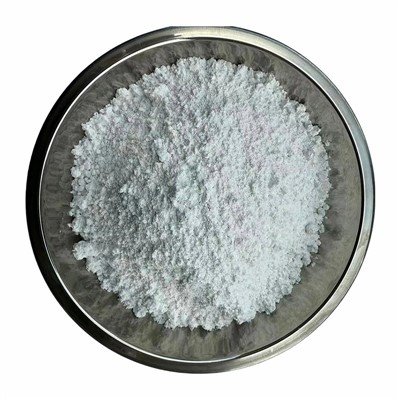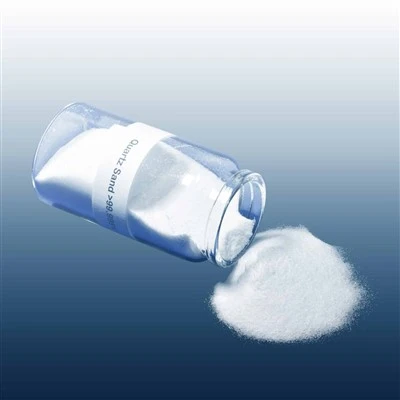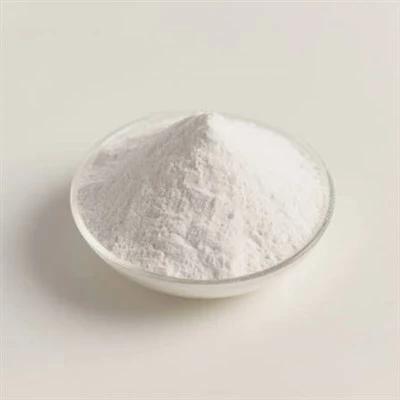

Fused-grade silica micropowder, a high-purity, highly uniform inorganic non-metallic material, is widely used in electronic packaging, semiconductor devices, high-end ceramics, and coatings.Its molding process directly affects the material's microstructure, physical properties, and final application results. This article systematically explores the molding process of fused-grade silica micropowder, analyzes the impact of key parameters on product performance, and introduces current mainstream molding technologies and optimization directions.
Characteristics and Molding Requirements of Fusion-Grade Silica Micropowder
Fused-grade silica micropowder is an amorphous silica powder formed from high-purity quartz through high-temperature melting and rapid cooling. It has extremely low levels of metallic impurities (such as Fe and Al), excellent sphericity, and good chemical and thermal stability. Its molding process must meet the following core requirements:
1.High Purity Maintenance: Avoiding secondary contamination during the molding process ensures that the impurity content of the final product is below the ppm level.
2.Densification Control: Achieving high bulk density through process optimization to meet the low expansion coefficient requirements of electronic packaging and other fields.
3.Particle Size Distribution Control: The molded material must have a uniform particle size distribution to improve flowability and fillability during subsequent processing.
Main Molding Processes for Fusion-Grade Silica Powder
1. Dry Pressing
Dry pressing is one of the most common methods for forming silica powder and is suitable for simple-shaped products (such as gaskets and substrates). The process includes:
•Pretreatment: Surface modification of the fused silica powder (such as adding a coupling agent) is performed to improve inter-particle bonding.
•Pressing: A pressure of 50–300 MPa is applied in the mold to achieve initial densification through particle rearrangement and plastic deformation.
•Demolding and Sintering: After demolding, the pressed green body is typically sintered at 1000–1200°C to further enhance strength.
Key Parameters: Excessive pressure can lead to particle breakage, while insufficient pressure reduces green body density. The choice of additives directly affects demolding and final mechanical properties.
2. Isostatic Pressing
Isostatic pressing uses a high-pressure fluid (such as oil or water) to apply isotropic pressure (typically 100–300 MPa) to powder. It is suitable for complex shapes or high-precision parts. Its advantages include:
•Uniform density distribution: It avoids the directional defects of dry pressing and is suitable for producing thin-walled or special-shaped parts.
•High densification potential: Combined with a subsequent hot isostatic pressing (HIP) process, parts with near-theoretical density can be achieved.
Process Challenges: Equipment costs are high, and strict requirements on powder flowability are imposed, requiring granulation to improve feed properties.
3. Injection Molding
Injection molding is suitable for miniaturized, highly complex silica micropowder parts (such as electronic packaging brackets). The process includes:
•Feedstock preparation: The silica micropowder is mixed with a thermoplastic binder (such as paraffin wax or polyethylene glycol) and then processed through a mixer to form a uniform feedstock.
•Injection: The feedstock is injected into a mold at 150–200°C and demolded after cooling to produce a green body.
•Debinding and sintering: The binder is removed through solvent or thermal debinding, followed by high-temperature sintering for densification.
Technical Difficulties: Complete binder removal is critical; residual carbon or organic matter may cause product defects; sintering shrinkage must be precisely controlled to ensure dimensional accuracy.
4. Gelcasting
Gelcasting is a near-net-shape shaping technique that uses monomer polymerization to form a three-dimensional network structure to secure powder. Its advantages include:
•Low shrinkage: Suitable for the production of large, highly uniform parts.
•Process flexibility: The slurry solids content (typically 40–60 vol%) can be adjusted to balance flowability and strength.
Limitations: Organic monomers may introduce impurities, requiring formulation optimization to meet high purity requirements.
Process Optimization and Future Trends
To improve the quality of fused-grade silica powder molding, researchers are focusing on the following areas:
1.Additive Development: Nanoscale sintering aids (such as MgO and Y₂O₃) can reduce sintering temperatures and inhibit grain growth.
2.Numerical Simulation: Finite element analysis is used to optimize pressing pressure distribution or injection channel design to reduce defects.
3.Green Processing: The promotion of water-based binders and pressureless sintering technology reduces energy consumption and environmental pollution.
Conclusion
The selection of a molding process for fused-grade silica powder requires a comprehensive consideration of product shape, performance, and cost-effectiveness. Dry pressing and isostatic pressing are suitable for traditional applications, while injection molding and gel casting offer unique advantages in precision manufacturing. In the future, with the development of new material systems and intelligent processes, fused-grade silica powder molding technology will further promote advancements in electronic packaging and high-end manufacturing.