



Ultra-fine Active Silica Powder is a remarkable material with a wide range of applications in various industries. As a supplier of this high - quality product, I am often asked about its porosity, which is a crucial characteristic that significantly affects its performance and usability. In this blog, I will delve into the concept of porosity in Ultra - fine Active Silica Powder, its importance, and how it relates to the powder's properties and applications.
Understanding Porosity
Porosity refers to the ratio of the volume of pores in a material to the total volume of the material. In the case of Ultra - fine Active Silica Powder, these pores can be either open or closed. Open pores are connected to the surface of the powder particles, allowing fluids or gases to enter and exit. Closed pores, on the other hand, are isolated within the particles and do not interact directly with the external environment.
The porosity of Ultra - fine Active Silica Powder is influenced by several factors during its production process. The raw materials used, the manufacturing method, and the subsequent processing steps all play a role in determining the pore structure and porosity of the final product. For example, the temperature and pressure conditions during the synthesis of the silica powder can affect the formation and growth of pores.
Measuring Porosity
There are several methods available to measure the porosity of Ultra - fine Active Silica Powder. One of the most common techniques is gas adsorption analysis, such as the Brunauer - Emmett - Teller (BET) method. This method involves measuring the amount of gas (usually nitrogen) adsorbed on the surface of the powder at different pressures. From the adsorption isotherm, the specific surface area and pore volume can be calculated, which are important parameters related to porosity.
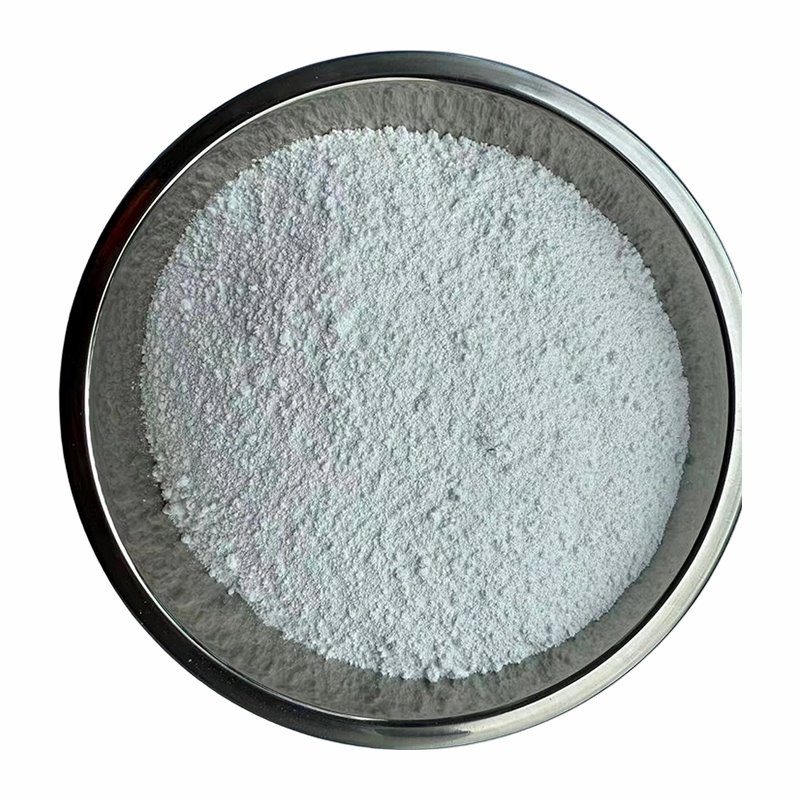

Another method is mercury intrusion porosimetry. In this technique, mercury is forced into the pores of the powder under increasing pressure. The volume of mercury intruded at each pressure step is measured, and from this data, the pore size distribution and porosity can be determined. However, this method has some limitations, such as the potential damage to the powder structure due to the high pressure applied.
Importance of Porosity in Ultra - fine Active Silica Powder
The porosity of Ultra - fine Active Silica Powder has a profound impact on its physical and chemical properties, as well as its performance in various applications.
Adsorption and Catalysis
High porosity means a large specific surface area, which provides more active sites for adsorption and catalytic reactions. In applications such as gas purification, water treatment, and heterogeneous catalysis, Ultra - fine Active Silica Powder with high porosity can adsorb more pollutants or reactants on its surface, leading to better purification or catalytic efficiency. For example, in the removal of heavy metals from wastewater, the high - porosity silica powder can adsorb a larger amount of metal ions due to its large surface area and pore volume.
Reinforcement in Composites
When used as a reinforcing filler in polymer composites, the porosity of Ultra - fine Active Silica Powder can affect the mechanical properties of the composite. The pores can act as stress concentrators or can provide a better interface with the polymer matrix. A proper pore structure can enhance the adhesion between the silica powder and the polymer, improving the strength, stiffness, and toughness of the composite. For instance, in rubber composites, the high - porosity silica powder can improve the dispersion of the filler in the rubber matrix and enhance the mechanical properties of the final rubber product.
Thermal Insulation
Porous materials generally have low thermal conductivity due to the presence of air or other gases in the pores. Ultra - fine Active Silica Powder with high porosity can be used as a thermal insulation material in applications such as building insulation and aerospace thermal protection. The pores in the silica powder trap air, which acts as an insulator, reducing the heat transfer through the material.
Applications of Ultra - fine Active Silica Powder Based on Porosity
The porosity of Ultra - fine Active Silica Powder makes it suitable for a wide range of applications in different industries.
In the Electrical Industry
In the electrical industry, Ultra - fine Active Silica Powder is used in various applications. Electrical Silica Powder is often required to have specific porosity characteristics. For example, in the production of electrical insulators, the porosity of the silica powder can affect its dielectric properties. A proper pore structure can help to reduce the dielectric loss and improve the insulation performance of the insulator. Electrical Grade Silica Powder with controlled porosity is also used in the encapsulation of electronic components to protect them from moisture and mechanical damage.
In the Electronic Industry
In the electronic industry, Electronic Silica Powder is widely used as a filler in printed circuit boards (PCBs) and semiconductor packaging. The porosity of the silica powder can influence the thermal expansion coefficient and mechanical properties of the PCB or packaging material. A low - porosity silica powder can provide better dimensional stability, which is crucial for the reliable operation of electronic devices.
Our Ultra - fine Active Silica Powder
As a supplier of Ultra - fine Active Silica Powder, we are committed to providing high - quality products with controlled porosity. Our production process is carefully optimized to ensure the desired pore structure and porosity of the silica powder. We use advanced manufacturing techniques and strict quality control measures to produce silica powder with consistent and reproducible porosity characteristics.
Our R & D team is constantly working on improving the porosity and other properties of our Ultra - fine Active Silica Powder to meet the evolving needs of our customers. Whether you need silica powder with high porosity for adsorption applications or low porosity for electronic packaging, we can provide customized solutions to suit your specific requirements.
Contact Us for Procurement
If you are interested in our Ultra - fine Active Silica Powder or have any questions about its porosity and applications, please feel free to contact us. We are always ready to provide you with detailed product information and technical support. Our experienced sales team will work closely with you to understand your needs and offer the best procurement solutions.
References
- Lowell, S., Shields, J. E., Thomas, M. A., & Thommes, M. (2004). Characterization of Porous Solids and Powders: Surface Area, Pore Size and Density. Springer.
- Rouquerol, F., Rouquerol, J., & Sing, K. (1999). Adsorption by Powders and Porous Solids: Principles, Methodology and Applications. Academic Press.
- Gregg, S. J., & Sing, K. S. W. (1982). Adsorption, Surface Area and Porosity. Academic Press.


